
The Common Birds of Uganda: Facts, List, Images, and Size.
The Birds of Uganda: A Photographer’s Guide
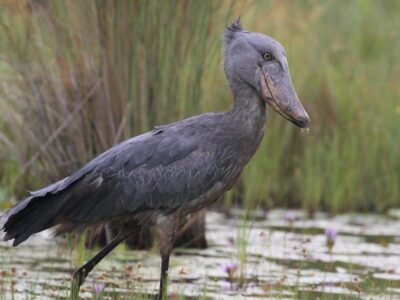
Discover common birds of Uganda: ID, key facts, size measurements, habitat notes, and tailored images, perfect for birders, students, and nature photographers. Photographers from the US, Europe, and Asia who chase rare silhouettes, painterly light, and unforgettable behavior will find a spectacular canvas in Uganda, a compact country where papyrus marsh, lowland wetland, riverine forest, and montane jungle sit within a few hours’ drive of one another. For one-shot bucket-list magic, head to Mabamba Swamp, where patient boatwork and low-angle light reward photographers with incredible encounters with the legendary shoebill; the swamp is globally known as the country’s top shoebill site.
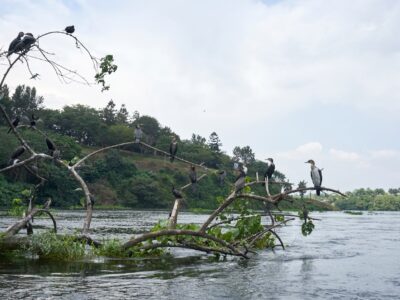
Beyond the marsh, Uganda’s mix of forests and waterways makes it a dream for specialist species. photographers: ancient-looking turacos and forest trogons in the high-canopy, Pel’s fishing owl and African finfoot along shaded rivers, and huge waterbird concentrations on major channels and lakes. Top field bases include Queen Elizabeth National Park and Murchison Falls National Park for waterbirds, raptors, and dramatic light over the Kazinga Channel and Nile rapids, while Bwindi Impenetrable National Park gives photographers access to montane forest specialties and jewel-bright turacos. Plan for early-morning boat or canoe shoots at wetlands, work with experienced local birding guides who know roosts and blinds, travel with long (300–600 mm) lenses and compact gimbal supports, and aim for seasons when water levels and migrant waves concentrate birds for the best behavioral and portrait opportunities.
Lists of birds in Uganda
- Common Ostrich
- Somali Ostrich
- Goliath heron
- African Jacana
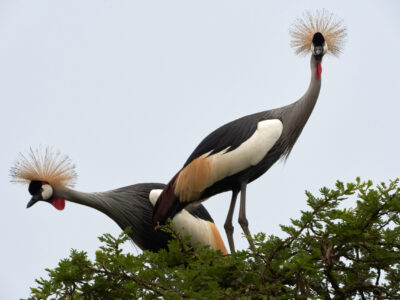
- Grey-crowned crested crane
- Harmerkop
- Eastern plaintain eater.
- African green pegeon
- Whistling-Duck
- Fulvous Whistling-Duck
- White-backed Duck
- Greater White-fronted Goose
- Blue-winged Goose
- Knob-billed Duck
- Hartlaub’s Ducke
- Ruddy Shelduck
- Common Shelduck
- Spur-winged Goose
- African Pygmy-Goose
- Garganey Spatula
- Blue-billed Teal
- Cape Shoveler
- Northern Shoveler
- Gadwall
- Eurasian Wigeon
- African Black Duck
- Yellow-billed Duck
- Mallard
- Ring-necked Francolin
- Red-winged Francolin
- Moorland Francolin
- Elgon Francolin
- Orange River Francolin
- Shelley’s Francolin
- Whyte’s Francolin
- Sand Partridge
- Blue Quail
- Common Quail
- Harlequin Quail
- Arabian Partridge
- Handsome Spurfowl
- Chestnut-naped Spurfowl
- Erckel’s Spurfowl
- Djibouti Spurfowl
- Jackson’s Spurfowl
- Red-billed Spurfowl
- Natal Spurfowl
- Hildebrandt’s Spurfowl
- Scaly Spurfowl
- Heuglin’s Spurfowl
- Clapperton’s Spurfowl
- Harwood’s Spurfowl
- Swainson’s Spurfowl
- Yellow-necked Spurfowl
- Gray-breasted Spurfowl
- Red-necked Spurfowl
- Speckled Pigeon
- White-collared Pigeon
- Bronze-naped Pigeon
- White-naped Pigeon
- Lemon Dove
- European Turtle-Dove
- Dusky Turtle-Dove
- Eurasian Collared-Dove
- African Collared-Dove
- White-winged Collared-Dove
- Mourning Collared-Dove
- Red-eyed Dove
- Ring-necked Dove
- Vinaceous Dove
- Laughing Dove
- Emerald-spotted Wood-Dove
- Black-billed Wood-Dove
- Blue-spotted Wood-Dove
- Tambourine Dove
- Namaqua Dove
- Bruce’s Green-Pigeon
- Pemba Green-Pigeon
- African Green-Pigeon
- Common Myna
- Violet-backed Starling
- Slender-billed Starling
- Neumann’s Starling
- Red-winged Starling
- Chestnut-winged Starling
- Waller’s Starling
- Tristram’s Starling
- White-billed Starling
- Bristle-crowned Starling
- Somali Starling
- Babbling Starling
- White-collared Starling
- Magpie Starling
- Sharpe’s Starling
- Abbott’s Starling
- Narrow-tailed Starling
- Stuhlmann’s Starling
- Kenrick’s Starling
- Black-bellied Starling
- Purple-headed Starling
- Hildebrandt’s Starling
- Shelley’s Starling
- Burchell’s Starling
- Rüppell’s Starling
- Long-tailed Glossy Starling
- Meves’s Starling
- Ashy Starling
- Splendid Starling
- Golden-breasted Starling
- Superb Starling
- Chestnut-bellied Starling
- African Pied Starling
- White-crowned Starling
- Fischer’s Starling
- Lesser Blue-eared Starling
- Sharp-tailed Starling
- Greater Blue-eared Starling
- Purple Starling
- Cape Starling
- Bronze-tailed Starling
- Oberländer’s Ground-Thrush
- Abyssinian Ground-Thrush
- Orange Ground-Thrush
- Ethiopian Thrush
- Groundscraper Thrush
- Song Thrush
- Abyssinian Thrush
- Taita Thrush
- Usambara Thrush
- Eurasian Blackbird
- Somali Thrush
- African Bare-eyed Thrush
- Kurrichane Thrush
- Olive Thrush
- African Thrush
- Ring Ouzel
- African Dusky Flycatcher
- Yellow-footed Flycatcher
- Spotted Flycatcher
- Gambaga Flycatcher
- Swamp Flycatcher
- Cassin’s Flycatcher
- Böhm’s Flycatcher
- Sooty Flycatcher
- Dusky-blue Flycatcher
- Marico Flycatcher
- African Gray Flycatcher
- Pale Flycatcher
- African Forest-Flycatcher
- Gray-throated Tit-Flycatcher
- Gray Tit-Flycatcher
- Chapin’s Flycatcher
- Ashy Flycatcher
- Silverbird
- Fiscal Flycatcher
- Yellow-eyed Black-Flycatcher
- Northern Black-Flycatcher
- Southern Black-Flycatcher
- White-eyed Slaty-Flycatcher
- Abyssinian Slaty-Flycatcher
- White-tailed Alethe
- Fire-crested Alethe
- Forest Scrub-Robin
- Brown Scrub-Robin
- Bearded Scrub-Robin
- Miombo Scrub-Robin
- Black Scrub-Robin
- Rufous-tailed Scrub-Robin
- Kalahari Scrub-Robin
- Brown-backed Scrub-Robin
- Red-backed Scrub-Robin
- White-bellied Robin-Chat
- Archer’s Robin-Chat
- Olive-flanked Robin-Chat
- Cape Robin-Chat
- White-throated Robin-Chat
- Blue-shouldered Robin-Chat
- Rüppell’s Robin-Chat
- White-browed Robin-Chat
- Red-capped Robin-Chat
- Snowy-crowned Robin-Chat
- White-crowned Robin-Chat
- Collared Palm-Thrush
- Spotted Morning-Thrush
- White-starred Robin
- Swynnerton’s Robin
- Brown-chested Alethe
- Red-throated Alethe
- Cholo Alethe
- White-chested Alethe
- Yellow-breasted Forest Robin
- Gray-winged Robin-Chat
- Short-tailed Akalat
- Bocage’s Akalat
- Lowland Akalat
- Equatorial Akalat
- Sharpe’s Akalat
- East Coast Akalat
- Usambara Akalat
- Iringa Akalat
- Rubeho Akalat
- White-throated Robin
- Thrush Nightingale
- Common Nightingale
- Bluethroat
- Red-breasted Flycatcher
- Semicollared Flycatcher
- European Pied Flycatcher
- Collared Flycatcher
- Common Redstart
- White-winged Redstart
- Black Redstart
- Little Rock-Thrush
- Sentinel Rock-Thrush
- Rufous-tailed Rock-Thrush
- Blue Rock-Thrush
- Miombo Rock-Thrush
- Cape Rock-Thrush
- White-winged Cliff-Chat
- Whinchat Saxicola rubetra
- European Stonechat
- Siberian Stonechat
- African Stonechat
- Moorland Chat
- Mocking Cliff-Chat
- Sooty Chat
- Northern Anteater-Chat
- Southern Anteater-Chat
- Mountain Wheatear
- Rüppell’s Chat
- Arnot’s Chat
- Northern Wheatear
- Capped Wheatear
- Buff-breasted Wheatear
- Rusty-breasted Wheatear
- Isabelline Wheatear
- Heuglin’s Wheatear
- Hooded Wheatear
- Desert Wheatear
- Western Black-eared Wheatear
- Cyprus Wheatear
- Eastern Black-eared Wheatear
- Pied Wheatear
- White-fronted Black-Chat
- Somali Wheatear
- Blackstart
- Familiar Chat
- Sombre Rock Chat
- Brown-tailed Chat
- White-crowned Wheatear
- Abyssinian Wheatear
- Mourning Wheatear
- Kurdish Wheatear
- Persian
Birds of Uganda Facts
The Birds of Uganda offer an irresistible mix of spectacle and science, from dazzling sunbirds and iridescent bee-eaters to iconic specialties like the shoebill, making the country a top pick for birders and photographers. Compact habitats (wetlands, montane forests, and savannas) concentrate migrants, regional endemics, and rare species, and easy-access hotspots such as Mabamba Swamp and Bwindi Impenetrable Forest deliver high-value sightings with short walks and expert local guides. It’s a compelling mix of accessibility, biodiversity, and photo-ready moments, perfect for first-time visitors and serious birdwatchers alike.
Birds of Uganda Gallery
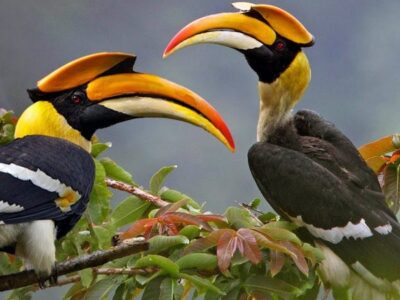
From iridescent rollers to the lumbering shoebill, birds of Uganda display breathtaking variety across forest, savanna, and wetland; a single day’s birding can turn up endemics, migrants, and charismatic specialties. Field guides, tour operators, and conservationists celebrate the birds of Uganda for good reason: compact habitats concentrate rare species, making sightings unusually rewarding. For anyone curious about African birds, reading and planning around the Birds of Uganda is an unbeatable way to start.
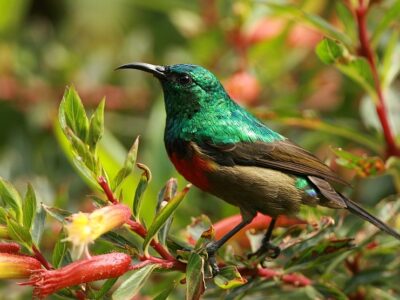
In conclusion, the birds of Uganda are a dazzling testament to East Africa’s birdlife, ranging from iconic specialties like the shoebill and turacos to countless migrants and endemics that knit together wetlands, montane forests, and savanna into a birder’s paradise. Compact, accessible hotspots and expert local guides mean the birds of Uganda offer high-value sightings for photographers, families, and scientists alike. At the same time, ongoing habitat protection and community-led conservation are essential to keep these species thriving. Ultimately, celebrating and safeguarding the birds of Uganda supports biodiversity, local livelihoods, and unforgettable nature experiences for generations to come.