Gorilla Strength (Uncover The Power of These Gentle Giants)
Gorilla Strength: All You Need To Know From The Primate Experts
Gorilla Strength (Uncover The Power of These Gentle Giants). Explore Silverback Gorilla Strength and all the stats you need to know about these African primates
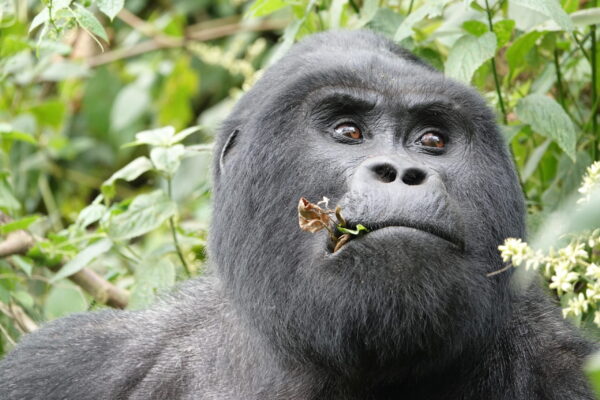
Gorillas possess a kind of raw, practical strength that’s built into every part of their bodies. Their broad chests, massive shoulders, and long, powerful arms house dense, highly efficient muscle that gives them extraordinary pulling and lifting power. They routinely move heavy logs, strip bark, and bend thick stems with seeming ease. Their hands and forearms are engineered for grip and leverage; strong flexor muscles and large hands let them apply tremendous force when climbing, knuckle-walking, or handling food. Even their skeletal structure, thick bones, and robust joints support repeated heavy loads and sudden explosive bursts of energy. This combination of anatomy and biomechanics makes gorillas capable of feats that dwarf untrained human strength and rival trained athletes in raw power and endurance.
That strength is not just spectacle; it’s central to how gorillas live, survive, and communicate. They use force to access nutritious but tough vegetation, build secure sleeping nests each night, and deter predators or rival groups when necessary, often using displays and chest-beating before physical confrontation. Socially, strength signals status: dominant silverbacks protect families, lead movements, and resolve conflicts, while physical prowess influences mating and group stability. Importantly, despite their power, gorillas are typically gentle and avoid violence when possible, so their strength should be respected rather than feared. Protecting these animals, and the forests that let them exercise and maintain that strength, preserves one of nature’s most impressive examples of evolved power and purpose.
More About Gorilla Strength (How Strong are the Gorillas)
-
Bite force (commonly cited): ~1,300 psi. Strongest among primates.
-
Upper-body pulling / lifting estimates: ~800–1,800 lb (≈360–816 kg) in some popular sources.
Several tour and wildlife sites quote an upper-body pulling capability in the ballpark of 816 kg (1,800 lb) or similar figures for a silverback’s raw pulling strength — these are frequently-cited estimates rather than laboratory-measured maxima. -
Strength compared with an average human: commonly stated as 4–10× stronger.
Many sources summarize experimental/observational comparisons by saying gorillas are roughly four to ten times stronger than an average untrained human — especially in upper-body tasks like pulling, gripping, and overhead movements. -
Historic experimental figure: ~450 kg push/pull (early study citation).
Older research summaries (often cited in modern writeups) report an adult gorilla’s push/pull capability around 450 kg; note that this figure is based on older work and is presented in secondary sources rather than recent controlled trials. -
Muscle density/fibre differences: higher muscle packing and fast-twitch composition.
Popular summaries and some comparative descriptions note gorilla muscle tends to be denser and more geared toward raw power (greater fast-twitch proportion), which helps explain why they outperform humans in absolute strength even when body sizes are similar. These are biomechanical interpretations rather than a single precise numeric measure.
Gorilla Strength is a blend of anatomy, muscle composition, and behavior. Dense, compact muscles, long lever-like arms, and reinforced bones create extraordinary force and endurance. Gorilla Strength underpins daily survival tasks like nest-building, accessing tough food, and protecting family groups, and it shapes social roles through non-lethal displays and dominance. Ultimately, Gorilla Strength is not merely spectacle; it’s an evolved, functional trait tied to ecology and social systems that deserves respect and conservation.