Jomo Kenyatta Airport (NBO) Facts, Location, Photos + Shops.
All You Need To Know About Jomo Kenyatta Airport
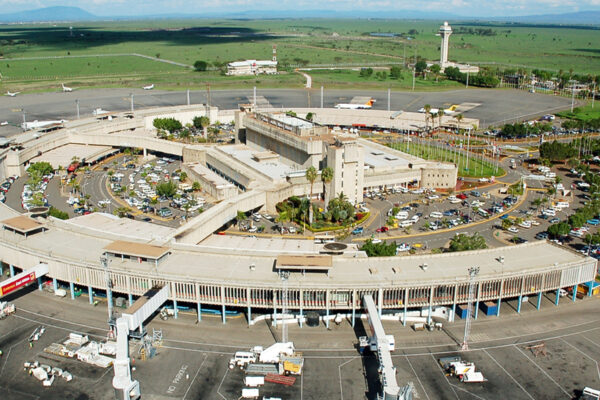
Jomo Kenyatta International Airport (JKIA) is East Africa’s busiest airport and Kenya’s principal international gateway, located about 15 kilometers southeast of Nairobi’s city center off Mombasa Road. Opened originally as Embakasi Airport on 9 March 1958 and renamed in 1978 after Kenya’s founding president, JKIA now handles over 8 million passengers a year, well beyond its originally designed capacity, and serves as the main hub for Kenya Airways and a critical connecting point for travel across East and Central Africa. The airport is laid out as a semi-circular complex, with Terminal 1 comprising concourses 1A through 1E connected in sequence, plus a separate Terminal 2 used mainly by low-cost and regional carriers that isn’t connected airside, so travelers switching between the two should allow 60–90 minutes. Terminal 1A handles the bulk of major international carriers, including Kenya Airways, Emirates, Qatar Airways, KLM, and Turkish Airlines. It is generally where you’ll find the strongest selection of lounges and dining. Given the pace of change here, with a major modernization and new terminal project recently announced, we always recommend confirming your specific terminal with your airline shortly before travel.
For safari travelers, Jomo Kenyatta Airport (JKIA) plays a slightly different role from that of a typical arrival airport: it’s the first stop before the real journey begins. Most Kenya safaris, into the Maasai Mara, Amboseli, or Samburu, depart from small aircraft based at Wilson Airport, a separate domestic and light-aircraft facility roughly 15 kilometers away, meaning a transfer of 30 to 60 minutes depending on Nairobi traffic is usually required between landing at JKIA and continuing to the bush. Nairobi’s congestion, particularly along Mombasa Road during rush hours, makes this transfer worth planning around rather than leaving it to chance, and this is exactly where a private, pre-arranged transfer earns its value over a same-day scramble. Whether travelers are heading straight out to a safari camp, overnighting near the airport before an early flight, or combining Kenya with a Tanzania or Uganda extension, JimJam Safaris builds the JKIA-to-Wilson connection and everything that follows into a single, well-timed itinerary rather than leaving guests to manage it alone. Talk to JimJam Safaris about arranging your Nairobi arrival and onward safari connections with the timing worked out in advance.
Jomo Kenyatta Airport (NBO): Kenya’s busiest and largest international airport, a primary gateway for travellers from Europe, America, and Asia.
Jomo Kenyatta Airport (NBO), Kenya’s busiest and largest international airport, serves as the primary gateway for travelers arriving from Europe, North America, Asia, and the Middle East. It is the main hub for Kenya Airways and offers extensive international connections.
Flying into JKIA to start your Kenya safari? JimJam Safaris can arrange your transfer to Wilson Airport and build your full, affordable luxury Maasai Mara safari itinerary around your arrival time. Contact us today for seamless transfers in Kenya.
Jomo Kenyatta Airport Facts
Jomo Kenyatta Airport (IATA: NBO, ICAO: HKJK) is East Africa’s largest and busiest airport, handling over 8 million passengers annually. It opened as Embakasi Airport on 9 March 1958 and was renamed in 1978 after Kenya’s founding president. Operated by the Kenya Airports Authority, JKIA serves as the main hub for Kenya Airways and SkyTeam partners and a key transit point across East and Central Africa. The airport comprises Terminal 1, with connected concourses 1A through 1E, and a separate Terminal 2 for low-cost and regional carriers. A major modernization plan, including a new passenger terminal, was announced in 2026 to address ongoing congestion and rising demand.
Jomo Kenyatta Airport Location
Jomo Kenyatta Airport (JKIA) sits approximately 15 kilometers southeast of Nairobi’s central business district, just off Mombasa Road. This positioning makes it convenient for city access but also means it’s vulnerable to Nairobi’s notorious traffic, particularly during rush hours between 7–9:30 am and 5–8 pm. The Nairobi Expressway, a toll road, significantly cuts journey times into town for travelers willing to pay the fee. For safari travelers, location matters most in relation to Wilson Airport, the city’s dedicated domestic and light-aircraft hub used for most flights into the Maasai Mara and other reserves, situated about 15 kilometers away, typically a 30 to 60 minute transfer depending on traffic.
Jomo Kenyatta Airport Photos
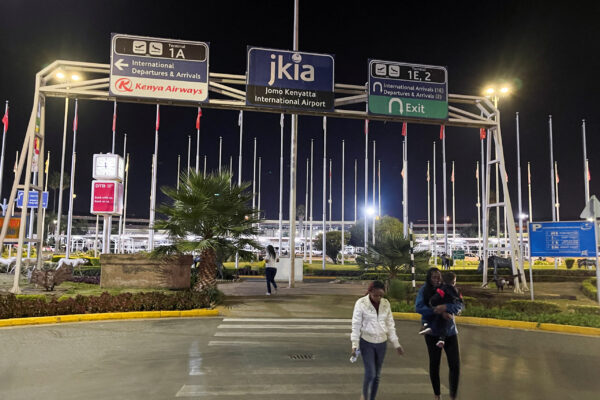
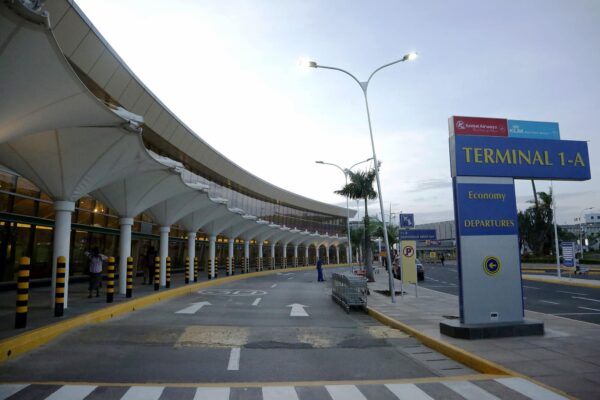
Here’s a look at the terminal complex and its surroundings.
JKIA’s Terminal 1A is the airport’s most modern and heavily used concourse, purpose-built for Kenya Airways and its SkyTeam partners, with a noticeably higher standard of finish, lounges, and dining than the airport’s older sections. The complex follows a semi-circular design, with concourses linked in sequence like beads on a string, allowing reasonably efficient movement between gates within Terminal 1. Terminal 2, used mainly by low-cost and regional carriers, has a more utilitarian, functional character and sits apart from the main building. Ongoing refurbishment work across several terminals is gradually modernizing check-in areas and centralizing security screening.
Jomo Kenyatta Airport Duty-Free Shops
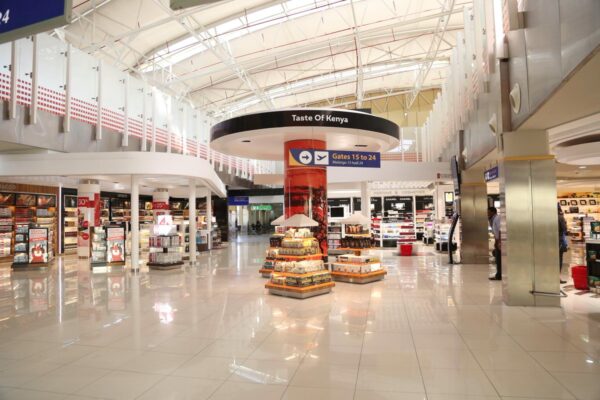
Jomo Kenyatta Airport (JKIA’s) terminals include duty-free retail alongside a solid selection of cafés and restaurants such as Java House, Artcaffe, and Dormans Coffee, plus lounges including the Kenya Airways Pride Lounge and several Priority Pass options. Duty-free offerings typically cover spirits, tobacco, cosmetics, and Kenyan specialties like coffee and tea, giving departing travelers a convenient last stop before boarding. Several forex bureaus also operate within the terminals, though rates here tend to run 3–5% worse than in the city, so exchanging only minimal cash at the airport is generally the smarter approach. As facilities and layouts are being updated as part of the airport’s modernization, it’s worth confirming current terminal assignments with your airline.