Lake Victoria: Facts, Wildlife, Fish, and Best Tours (2027).
Most travelers see Lake Victoria from a plane window as they land in Entebbe, then head straight for the gorillas or the savannah. That’s a missed opportunity. Lake Victoria is Africa’s largest lake by surface area and the second-largest freshwater lake in the world. It touches three of East Africa’s best safari countries, Uganda, Kenya, and Tanzania, and it works as a slow, comfortable start or finish to almost any safari.
At JimJam Safaris, we plan private, tailor-made safaris across East and Southern Africa. We often build the lake into an itinerary as a rest stop after long drives or a difficult trek, or as a wildlife experience of its own. This guide explains what the lake offers, where to go and when, and how to fit it into a wider journey.
Lake Victoria Facts
- Size: About 68,000 km² (figures vary by source), Africa’s largest lake by area
- Global rank: Second-largest freshwater lake in the world, after Lake Superior
- Countries: Uganda, Kenya, and Tanzania
- Depth: Shallow for its size, averaging around 40 m, with a maximum of roughly 80 m
- Nile connection: Its outflow at Jinja is the source of the White Nile
- Local name: Nalubaale in Uganda
- Named by John Hanning Speke in 1858, after Queen Victoria
- Islands: Hundreds, including the Ssese Islands, Ngamba, Rubondo, and Rusinga
- People: Tens of millions live in the surrounding basin, many of them dependent on the lake for fishing, farming, and trade
Lake Victoria Location
Lake Victoria sits on the equator in East Africa, on the plateau between the Western and Eastern Rift Valleys. Uganda’s shoreline is in the north and northwest, Kenya’s in the northeast, and Tanzania holds the southern and western shores. That makes it easy to reach from three safari hubs. Entebbe Airport sits right on the water, Mwanza gives access to the western Serengeti, and Kisumu opens up western Kenya. For travelers, this means the lake connects neatly with gorilla trekking in Uganda, game drives in Tanzania, and cross-border East African itineraries.
Lake Victoria Wildlife
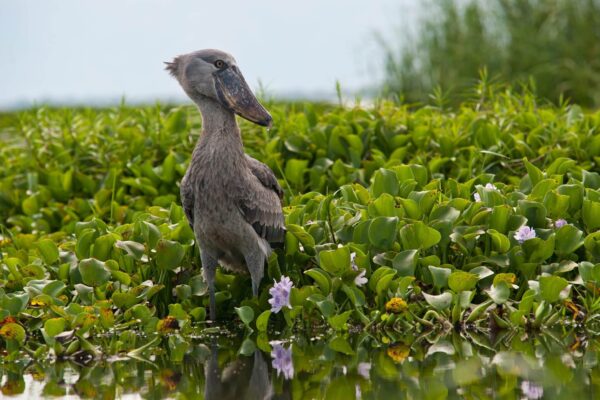
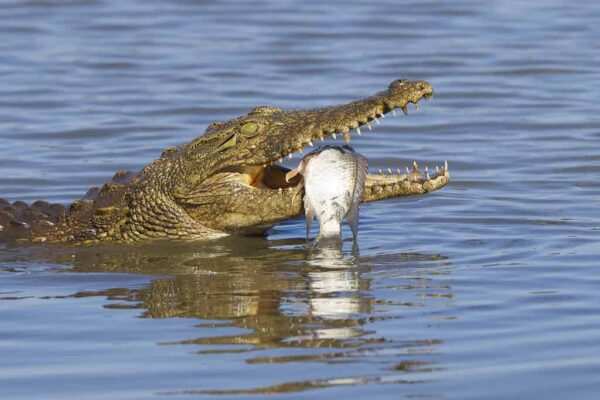
Lake Victoria’s wildlife is best enjoyed by boat, canoe, or on foot along the shore. Hippos and Nile crocodiles are common, and the papyrus swamps hold sitatunga antelope and the elusive shoebill, a favorite of birders, especially at Mabamba Bay. African fish eagles, kingfishers, herons, and many other water birds are easy to spot. Islands add further variety: Ngamba shelters rescued chimpanzees, while Rubondo is known for forest walks and its own chimpanzees and birdlife. As with all wildlife, sightings cannot be guaranteed, but early-morning outings give the best chances.
Lake Victoria Fish
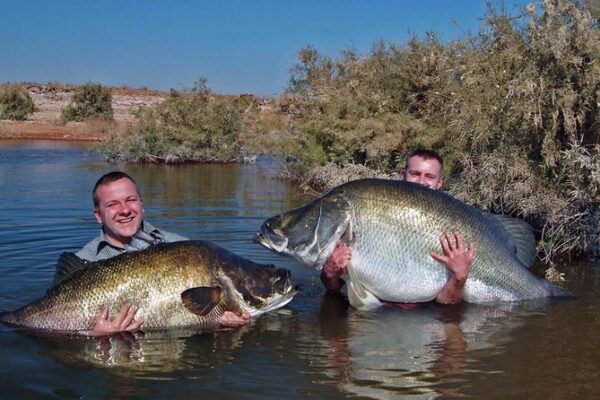
Fishing is the lifeblood of Lake Victoria. The best-known catches are Nile perch, introduced in the 1950s, and Nile tilapia, both central to local economies and export markets. Small silver fish, called mukene in Uganda and omena in Kenya, are dried and sold widely as an affordable source of protein. The lake was once famous for hundreds of haplochromine cichlid species, many of which declined sharply after the Nile perch introduction. For visitors, the lake offers sport fishing, landing-site visits, and freshly grilled fish at lakeside lodges. It also offers a real look at how communities live from the water.
Lake Victoria Tours
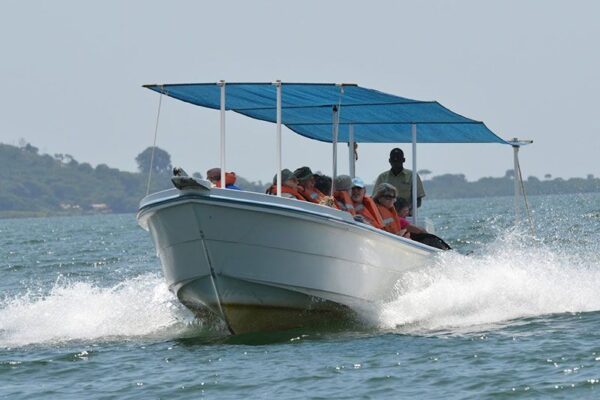
JimJam Safaris weaves Lake Victoria into private, tailor-made itineraries. Popular options include a sunset cruise from Entebbe, a canoe trip to Mabamba Bay for shoebills, and a visit to Ngamba Island’s chimpanzee sanctuary. For a slower pace, we arrange stays on the Ssese Islands, or on Rubondo in Tanzania. Adventure seekers can add Jinja for white-water rafting and boat trips to the Nile’s source. Two to four days suit most travelers, and the lake pairs well with gorilla trekking, the Serengeti, or a Uganda-Kenya combination. We handle ferries, transfers, and timing, so every day works in practice.
Lake Victoria Safari Guide: Islands, Wildlife, and Where to Go
Why Add Lake Victoria to an African Safari?
It’s a gentler pace between big activities. A gorilla trek in Bwindi or a full game-drive week in the Serengeti is rewarding but tiring. A day or two of boat cruises, island walks, and sunset drinks is a sensible way to recover before a long flight home.
It’s close to the international airport. Entebbe International Airport sits on the lake shore, so a lake stay needs little transfer time on arrival or departure day. That helps if you land late or have an evening flight.
It offers wildlife that most itineraries skip. Shoebills, chimpanzees, sitatunga antelope, hippos, and a long list of water birds live in and around the lake.
It gives you a real sense of local life. Landing sites, fish markets, island villages, and boat builders show how communities live around the water.
Where to Go: Lake Victoria by Country
Uganda: The Best-Developed Lake Experience
Uganda has the most varied choice of lake activities, and most are within easy reach of Entebbe and Kampala.
Entebbe and the northern shore
Entebbe combines a botanical garden on the lakeshore, the Uganda Wildlife Education Centre, and a range of lakeside hotels. It works well for the first or last night of a safari.
Mabamba Bay Wetland (shoebill birding)
Mabamba, a Ramsar-listed wetland near Entebbe, is one of Uganda’s best-known places to look for the shoebill, a large, prehistoric-looking bird. You explore the papyrus channels by canoe with a local guide. Sightings are never guaranteed, since these are wild birds, but the wetland also has many other species, so the outing is worthwhile for birders either way. Early morning is usually the preferred time.
Ngamba Island Chimpanzee Sanctuary
Ngamba is a forested island in the lake, reached by boat from Entebbe. It is a sanctuary for chimpanzees rescued from the illegal pet and bushmeat trades. Visitors watch feeding times from a viewing platform. This is a sanctuary encounter, not wild chimpanzee trekking, which is done in places like Kibale Forest. We explain that difference to guests when planning so expectations are clear. Visits are limited in number, so booking ahead is sensible.
Ssese Islands
Ssese is an archipelago of around 80 islands in the northwest of the lake. Bugala, the largest, has sandy beaches, forest walks, quiet lodges and small fishing villages. It suits couples, families, and anyone who wants a few slow days of walking, kayaking, cycling or fishing. Getting there means a ferry from the Entebbe area or a road-and-ferry route via the western shore, and sailing times and schedules change, so we confirm current details when we build your itinerary.
Jinja and the source of the Nile
Jinja is where the Nile leaves the lake. The town has become East Africa’s adventure hub, with white-water rafting, kayaking, boat trips to the source, quad biking and horse riding. It is roughly a two- to three-hour drive from Kampala, depending on traffic, and fits well between Kampala and the eastern or northern parks.
Tanzania: Where the Lake Meets the Serengeti
The southern shore around Mwanza sits close to the western side of the Serengeti, and it’s a practical way to link a safari to the lake.
- Mwanza: A lively lakeside city known for its granite rock formations and a common gateway for flights to the Serengeti.
- Saanane Island National Park: A small island park near Mwanza. It’s a short outing rather than a main event, but a pleasant one for a half day.
- Rubondo Island National Park: A quiet island park in the southwest of the lake, reached by boat or light aircraft. It is known for forest walks, sitatunga, water birds, chimpanzees, and sport fishing. It suits travelers who want somewhere remote and peaceful with few other visitors. Access and logistics are more involved than for Uganda’s lake sites, so early planning matters.
Kenya: Kisumu and the Western Shore
Kenya’s part of the lake is smaller but has its own appeal. Kisumu is the main city, with a waterfront, a local museum and the Kisumu Impala Sanctuary. Nearby, the Rusinga and Mfangano islands offer fishing communities, rock art and quieter lake stays. Western Kenya also links naturally with Kakamega Forest and, for longer trips, the Maasai Mara.
What to Do Around Lake Victoria
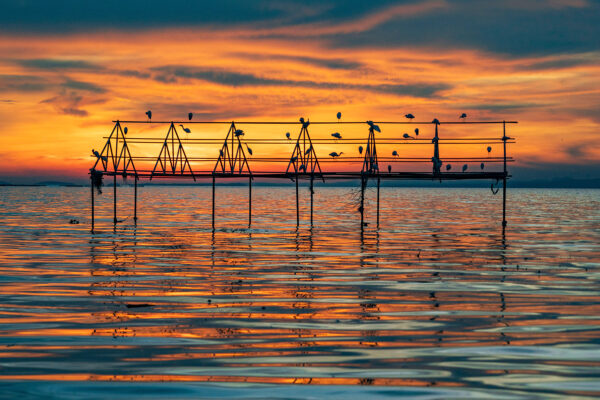
- Sunset boat cruises
- Canoe trips for shoebills and other birdlife
- Chimpanzee sanctuary visit (Ngamba)
- Island walks, cycling, and kayaking (Ssese)
- White-water rafting and kayaking (Jinja)
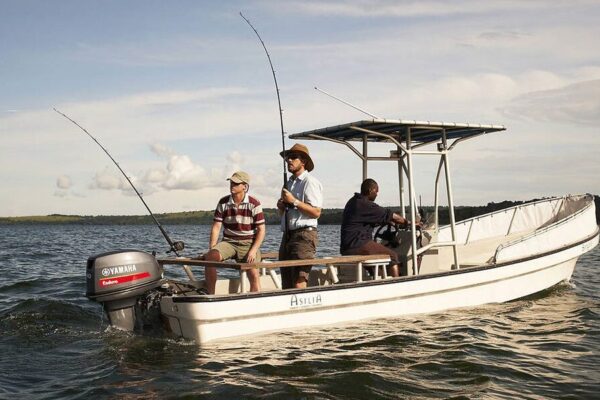
- Sport fishing, including for Nile perch
- Village and landing-site visits
- Spa and beach-style downtime at lakeside lodges
Best Time to Visit Lake Victoria
Lake Victoria can be visited all year. The region has two rainy seasons, generally around March to May and October to November, though patterns vary from year to year. The drier months, roughly June to September and December to February, tend to be more comfortable for boat trips, island stays, and birdwatching. Rain is not a reason to skip the lake, but it can make some road and boat conditions slower, so we advise on timing when we plan.
Lake Victoria Tours to Inspire You
We adjust the pace, accommodation, and activities to each traveler.
2 Days: Entebbe Lake Break
- Day 1: Arrive in Entebbe, settle into a lakeside hotel, and take a sunset boat cruise.
- Day 2: Early Mabamba Bay canoe trip for shoebills, then an afternoon at the Wildlife Education Centre or botanical garden before your flight.
4 Days: Ssese Islands Escape
- Day 1: Transfer from Entebbe to the ferry and cross to Bugala Island.
- Days 2–3: Beach time, forest walks, kayaking or fishing, and village visits.
- Day 4: Return crossing and transfer to Entebbe.
Add to a Gorilla Safari (Uganda)
Combine a Bwindi gorilla trek and Queen Elizabeth or Kibale with a final two nights around Entebbe and Ngamba or Mabamba. It ends the trip gently and puts you near the airport.
Add to a Serengeti Safari (Tanzania)
Finish a northern Tanzania safari with a night or two in Mwanza, or a remote stay on Rubondo Island for something quieter after the game drives.
Cross-border Idea (Uganda + Kenya)
Start around Entebbe and Jinja, cross toward western Kenya, and continue to Kisumu, Rusinga, or the Maasai Mara. This needs careful border and timing planning, and we explain each transition in advance.
Health, Safety, and Practical Notes
- Swimming: Freshwater in many parts of the region can carry bilharzia (schistosomiasis). Ask your guide or lodge before swimming, and consult a travel-health clinic before departure.
- Malaria: The lake region is a malaria area, so speak to your doctor about prevention.
- Entry rules and visas: Requirements differ for Uganda, Kenya, and Tanzania and can change. Check official government sources before booking, or ask us to point you to them.
- Ferries and flights: Schedules, ferry timings, and light-aircraft availability change, so we confirm current details at the time of booking.
- Packing: Light layers, sun protection, a hat, insect repellent, binoculars, and a waterproof layer for boat trips.
Responsible Lake Tourism
Lake Victoria supports millions of people through fishing, farming, and trade, and it faces real pressures, including overfishing, pollution, invasive species and changing water quality. Visitors can help by choosing operators and lodges that manage waste responsibly, buying from local fishing and craft communities, avoiding single-use plastic on boats, and following guide instructions around birds and wildlife. When we plan, we favor locally owned accommodation and local guides where possible.
Why Plan Your Lake Victoria Stay with JimJam Safaris.
- Private, tailor-made planning: No fixed group departures. We adjust each trip to your dates, interests, and budget.
- Affordable luxury: Comfortable, well-chosen accommodation and knowledgeable guides at sensible prices, without unnecessary extras.
- Cross-border knowledge: We plan trips across Uganda, Kenya, Tanzania, and beyond, including the border and transport details.
- Realistic itineraries: We consider driving times, ferry schedules, and traveler fatigue so the days work in practice.
- Local expertise: Our team knows the region firsthand and can advise on what suits your group, whether that’s a honeymoon, a family trip or a solo journey.
Frequently Asked Questions
Is Lake Victoria worth visiting on a safari?
Yes, particularly as a relaxed stop before or after gorilla trekking or game drives. It suits travelers who want birdlife, island scenery, cultural visits or a break from long drives.
Which country has the best Lake Victoria experience?
Uganda is the most convenient for short lake extensions because of Entebbe, Mabamba, Ngamba, Ssese and Jinja. Tanzania suits Serengeti-linked trips, and Kenya suits western Kenya combinations.
Can I see wildlife around Lake Victoria?
Yes, including hippos, water birds, monkeys and, at the right sites, shoebills, chimpanzees at Ngamba and sitatunga at Rubondo. As with any wildlife, sightings can’t be guaranteed.
Are chimpanzees at Ngamba wild?
No. Ngamba is a sanctuary for rescued chimpanzees. If you want to track wild chimpanzees, we can arrange that in Kibale Forest or other suitable parks.
How many days should I spend at Lake Victoria?
Two to four days works for most travelers. A short Entebbe stay needs only one or two nights, while Ssese or Rubondo suit a longer stay.
Can I swim in Lake Victoria?
Only after checking with your lodge or guide, as some shorelines carry a health risk. Pools at lodges are the safer option.
When should I book?
As early as your dates are firm, especially for island stays, sanctuary visits, and peak-season travel.
Ready to Plan Your Lake Victoria Journey?
Whether you want a two-night rest before your flight home or a full island retreat within a wider East African safari, JimJam Safaris can build a private itinerary around your preferred destinations, travel dates, accommodation style, and budget. Talk to us about creating an affordable luxury safari that includes Lake Victoria.