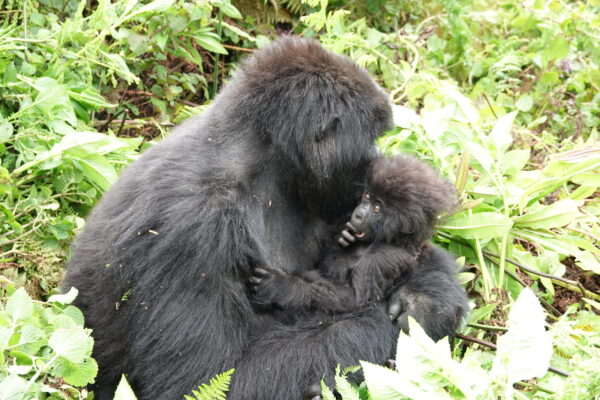
Mountain Gorilla Population Distribution Graph 2026 Estimate
Mountain Gorilla Population Facts For All
Explore the Mountain Gorilla Population Distribution Graph 2026 estimate, showing updated numbers across Bwindi and the Virunga Massif with expert insights. This clear, data-forward graph presents the 2026 estimate of the global mountain gorilla population (1,063 individuals) and how these animals are split across the species’ two core strongholds: the Virunga Massif and the Bwindi–Sarambwe region. The visualization highlights that roughly half the population resides in the Virunga area, anchored by Virunga National Park. At the same time, the remainder is concentrated in the Bwindi ecosystem, centered on Bwindi Impenetrable National Park and neighboring reserves. The chart also flags smaller but important subpopulations in protected areas such as Volcanoes National Park. It makes the country-level distribution explicit for Uganda, Rwanda, and the Democratic Republic of the Congo sector, giving viewers an immediate, map-style sense of where conservation wins and risks are concentrated.
Beyond raw counts, the graph is designed to tell the story behind the numbers: stacked bars and an inset map show recent upward trends driven by decades of anti-poaching, veterinary care, and community tourism, while annotated risk zones and a “habitat pressure” overlay call out where growth is bumping against limited forest area and human land use. That combination makes the visualization perfect for funders, park managers, and policy briefs; it’s both a celebration of recovery and a tactical tool, pointing to which parks and borders need more corridors, stricter disease surveillance, or targeted community programs to keep the momentum going.
Protecting mountain gorillas starts with seeing them clearly. Our key mountain gorilla population data list is a compact, evidence-first toolkit that turns messy monitoring notes into actionable intelligence, clear subpopulation counts (by range), trend lines, age–sex structure, group sizes, GPS-linked sightings, major threats, and source citations. Designed for conservation teams, park authorities, and funders, this list makes it effortless to spot where protection is working, where pressure is rising, and which communities or parks need urgent investment.
- Mountain gorillas live only in high-altitude forests (2,200–4,300 meters).
- Their survival is strongly tied to conservation tourism, especially gorilla trekking in Uganda and Rwanda.
- Long-term monitoring by organizations like the World Wildlife Fund and International Gorilla Conservation Programme has helped increase populations over the past two decades.
| Category | Virunga Massif Population | Bwindi Population |
|---|---|---|
| Estimated Gorilla Population | ~604 individuals | ~459 individuals |
| Main Protected Areas | Virunga National Park, Volcanoes National Park, Mgahinga Gorilla National Park | Bwindi Impenetrable National Park |
| Countries | Rwanda, Uganda, Democratic Republic of the Congo | Uganda |
| Altitude Range | 2,400 – 4,500 meters | 1,160 – 2,600 meters |
| Tourism Gorilla Groups | Several habituated groups across the Virunga parks | Multiple habituated groups in four trekking sectors |
| Popular Trekking Locations | Volcanoes NP (Rwanda), Mgahinga NP (Uganda) | Buhoma, Rushaga, Ruhija, Nkuringo sectors |
| Typical Trekking Difficulty | Moderate to challenging depending on gorilla family location | Moderate to strenuous due to dense forest terrain |
Mountain Gorilla Population Success Rate
The comeback of mountain gorillas is one of conservation’s clearest wins: after crashing to a few hundred in the 1970–80s, careful protection, anti-poaching patrols, and community-based tourism helped populations recover to just over a thousand animals. Crucial factors were long-term monitoring, transboundary park cooperation, and revenue from regulated gorilla visits that fund parks and local livelihoods. Success isn’t a finished story, growth has slowed in places where habitat is saturated, but steady population increases show that targeted, well-resourced programs can reverse declines. World Wildlife Fund.
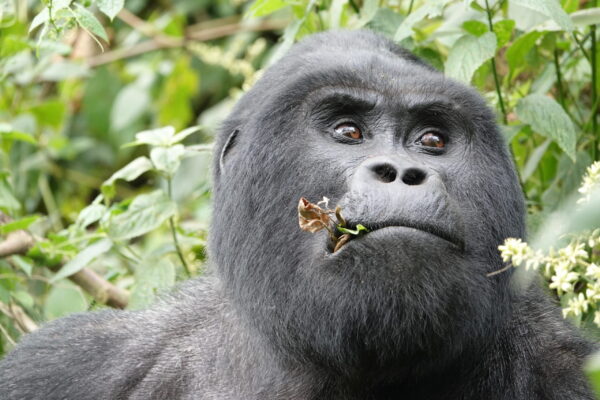
Mountain Gorilla Population Threats (What still endangers them)
Mountain gorillas face persistent risks even as numbers rise. Habitat loss from farming and fuelwood collection squeezes living space and food; human-gorilla contact raises the chance of disease transmission, and respiratory outbreaks can be deadly. Poaching (including snares intended for other animals), regional conflict that disrupts protection, and infrastructure development all undermine recovery. Increasing density in small protected patches also risks social stress, inbreeding, and slower reproduction. These combined threats mean conservation must manage not just numbers but land, health, and human livelihoods to secure long-term survival. International Gorilla Conservation Programme.
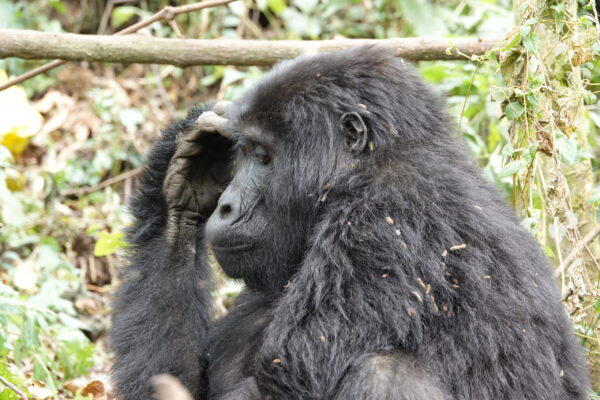
Mountain Gorilla Population Conservation (Strategies that work)
Effective strategies blend protection, veterinary care, and community benefits. Strong ranger patrols, park expansion, and habitat restoration reduce poaching and fragmentation; targeted veterinary interventions and rapid response teams help manage disease and injury; and regulated ecotourism supplies funding that’s shared with local communities, creating incentives to protect gorillas. Transboundary collaboration between parks, scientific monitoring, and programs that offer alternative livelihoods (agroforestry, fuel-efficient stoves) further reduces pressure on forest edges. Organizations that provide veterinary support and monitoring are key partners in keeping gorillas healthy and parks safe.