
Amazing 7-Day Rwenzori Trekking Itinerary To Margherita Peak
The Unmissable Rwenzori Trekking Safari Via Central Circuit
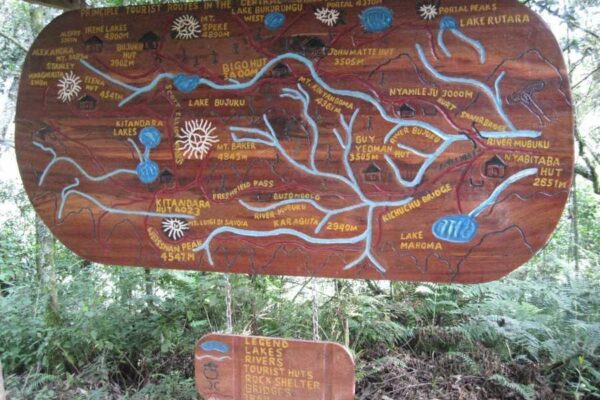
Amazing 7-Day Rwenzori Trekking Itinerary to Margherita Peak. A Complete 7-Day Rwenzori Trekking Package Via the Central Circuit. Visit the Rwenzori Mountains. This 7-day Rwenzori Central Circuit starts at Nyakalengija (1,615 m) and climbs quickly into montane forest and river valleys before reaching Nyabitaba Hut (2,651 m). Over the first half of the route, you pass farmland into thick forest along the Mubuku and Mahoma rivers, with chances to hear chimpanzees and spot black-and-white colobus, blue monkeys, and the colorful Rwenzori turaco. The trail then gains serious altitude through bamboo, slippery moss-covered rock, and giant heather and lobelia zones as you move on to John Matte (3,505 m) and Bujuku Camp (3,962 m); the latter is a useful acclimatization stop with views of Mt. Baker and Mt. Stanley, and onward to Elena Camp (4,541 m). Typical daily walking times on these sections are roughly 4–8 hours.
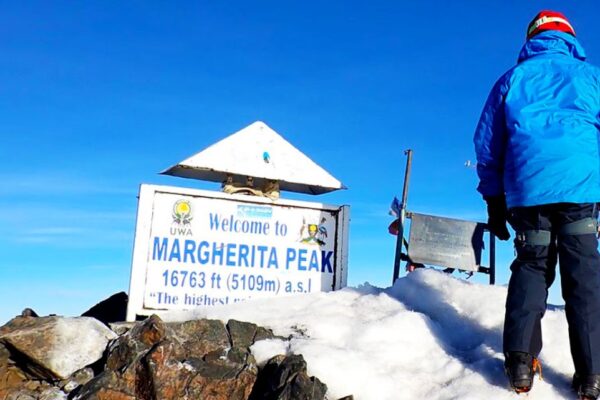
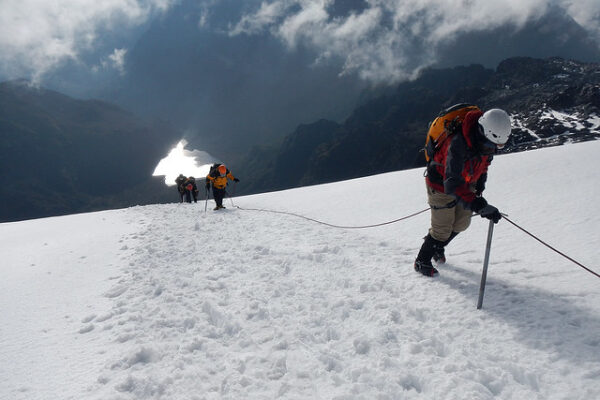
The second half of the trek is high alpine and glaciated. From Elena, you make an early summit push for Margherita Peak (5,109 m), a challenging 4–5 hour climb over three glaciers, exposed rock, and ice, before descending via Scott-Elliot Pass to Kitandara Camp (4,430 m). You then cross Freshfield Pass (4,282 m) with big western views into the Congo, descend to Guy Yeoman (3,261 m), and follow the Kichuchu cliffs and bamboo forests back down through Nyabitaba to finish at Nyakalengija on day seven. Expect steep climbs, boggy tussock crossings, and spectacular alpine scenery throughout; the circuit demands good acclimatization, steady fitness, and careful footing on wet, slippery, and icy sections.
7-Day Rwenzori Trekking Cost/Price
Looking for a clear, fair breakdown of the 7-Day Rwenzori Trekking Cost/Price? Our pricing is intentionally transparent: one package covers park permits and entrance fees, experienced guides and porters, porter wages and insurance, all meals on trek, campsite fees, group camping gear, and round-trip transport to the trailhead, so what you pay supports safety and local communities rather than hidden extras. We offer tiered options, budget group trips for travelers watching their wallet, mid-range departures with extra comforts, and private guided packages, plus itemized add-ons (gear rental, airport transfers, tips) so you only pay for what you actually want. Flexible deposit plans and seasonal discounts make the trek accessible, and every booking comes with a detailed quote and cancellation terms so you can compare true value, not just a headline price.
Detailed Itinerary: 7-Day Rwenzori Trekking
Day 1: NYAKALENGIJA (1615m asl.) – NYABITABA CAMP (2651m asl.)
The Rwenzori Mountaineering Services headquarters in Nyakalengija is the starting point of the core circuit for the 7-Day Rwenzori Trekking Safari. In order to have enough time to rent equipment, meet your guides, and meet your porters, you must arrive early. Before beginning a lengthy, hard climb up onto a large mountain to reach Nyabitaba hut, the trail passes through farmland until the park boundary. After that, it follows a dense forest along the Mubuku River and crosses its Mahoma River branch. During this portion of the journey, you might hear chimpanzees and observe blue monkeys, black and white colobus, and the vividly colored Rwenzori turraco.
The hike takes an average of 6 -7 hours.
Day 2: NYABITABA – JOHN MATTE CAMP (3505m asl.)
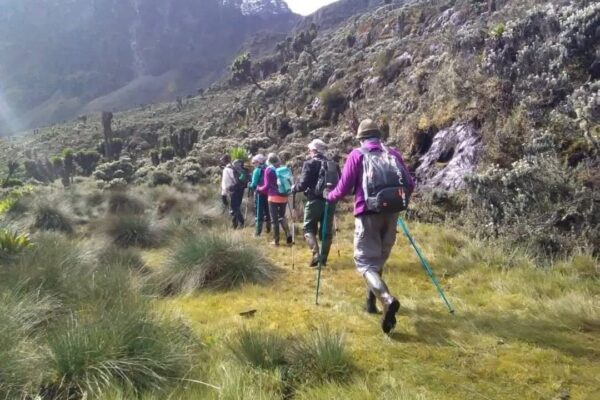
Locate the Kurt Shafer Bridge, which is located right below the meeting point of the Mubuku and Bujuku rivers, by following the trail that descends through the forest from Nyabitaba. Travel through a long and tiresome stretch of slick rock coated in moss as you pass through the bamboo grove. Mount Stanley and Mount Speke are visible from the Nyamuleju rock shelter before entering the groundsel, lobelia, and giant heather zone. After navigating the exhausting muck, finally arrive at John Matte Hut for dinner and spend the night there.
The hike takes an average of 7 – 8 hours.
Day 3: JOHN MATTE – BUJUKU CAMP (3962m asl)
The trail descends from John Matte Hut, crosses the Bujuku River, and enters Lower Bigo Bog, where huge lobelias can be found. The bog is eventually spanned by leaping from tussock to tussock; this is rarely done without the feet tasting some of the icy sludge below. With views of Mount Stanley to the west and Mount Baker to the south, the upper Bigo bog gives way to Bujuku Lake. Bujuku Hut is situated in a little valley beneath Stuhlmann Pass, under the shadow of Mount Baker and Mount Speke. For guests trying to reach the summits of Mount Stanley and Mount Speke, this camp is beneficial for acclimatization. Bujuku Hut for dinner and the night.
The hike takes an average of 4 – 5 hours.
Day 4: BUJUKU – ELENA CAMP (4541m asl.)
After leaving Bujuku, the trail passes over additional bog, ascends the steep hills west of the lake, and passes into the enchanted woodland of Groundsel Gully. The trail on your left leads to Scott-Elliot Pass and down to Kitandara Lakes, while the trail on your right leads to Elena Hut and Mount Stanley via a steep trail over big boulders. For those who are not ascending Margherita Peak, the trail on the left leads to Kitandara Hut. Climbers will spend the night and eat dinner at the refreshing Elena Hut.
The hike takes an average of 5 – 6 hours.
Day 5: ELENA HUT – MARGHERITA PEAK (5109m asl.) – KITANDARA CAMP (4430m asl.)
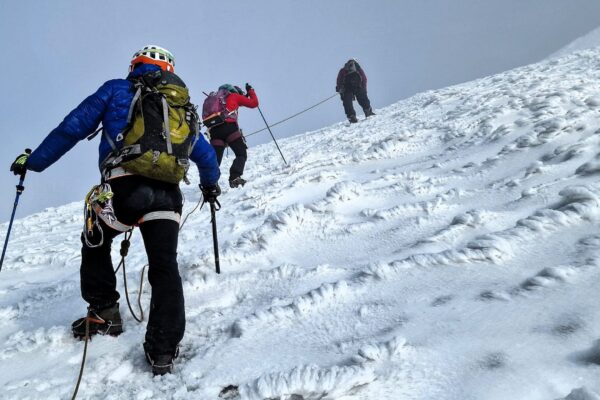
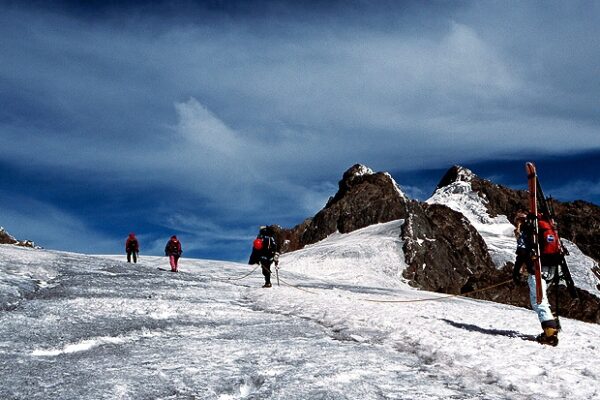
You try to ascend Mount Stanley’s highest peak, Margherita, very early in the morning. Depending on the weather and the rate of ascent, it takes four to five hours to reach the top of Margherita. This strenuous hike passes over three glaciers, ice, slick rock, and extremely exposed parts that are open on multiple sides. Climb onto the glaciers, across the Stanley Plateau, and continue climbing. Scramble to the top of Margherita, the tallest peak in the Rwenzori, acclimated to fog, altitude sickness, and cold weather. It will take you two to three hours to descend from Margherita Peak back to Elena Hut.
After lunch at Elena Hut, head down to the Scott-Elliot Pass (4372 meters above sea level) for breathtaking views of Mount Speke and Bujuku Lake. The track then descends past the Kitandara Lakes for dinner and spends the night in the Kitandara camp after passing through an alpine zone with little vegetation and jagged stones.
The descend takes an average of 3 – 4 hours.
Day 6: KITANDARA – GUY YEOMAN (3261m asl.)
From Kitandara, follow the steep trail that climbs the headwall at the base of Mount Baker and continues along the mountain’s southern flank to Freshfield Pass (4,282 m asl). From the pass, you gain expansive views west into the Congo and north toward Mount Stanley. Continue across the long, high-alpine mossy plateau before beginning the descent via steep, rocky trails to the historic rock shelter at Bujongolo—the base camp of the Duke of Abruzzi’s 1906 expedition—then overnight at Guy Yeoman Camp.
The hike takes an average of 6–7 hours.
Day 7: GUY YEOMAN – NYABITABA – NYAKALENGIJA (1615m asl)
Below Guy Yeoman, the route descends the cliffs of Kichuchu. Beyond Kichuchu, the muddy path crosses the Mubuku River twice, passing through a bamboo forest, before descending to Nyabitaba to complete the circuit.
Continue descending to Nyabitaba Camp and complete your trek by the evening at Nyakalengija, the base camp.
The descent takes 7–8 hours
End of your 7-Day Rwenzori Trekking Safari
Tips For Booking a 7-Day Rwenzori Trekking Safari
When booking a 7-day Rwenzori trekking safari, choose a reputable operator who handles park permits, experienced guides and porters, and provides a clear emergency plan. Time your trip for the drier season and build fitness and acclimatization into your schedule. Confirm which technical items the operator supplies (harnesses, crampons, ice axes, ropes), and bring a warm sleeping bag rated around −10°C, rubber boots, gaiters, and waterproof layers. Pack a compact first-aid kit and high-energy snacks, and buy travel insurance that covers high-altitude rescue. Book early to secure dates and support responsible local guides. Ask about acclimatization days and altitude precautions, too.
The Best/Worst Time To Go For Rwenzori Trekking
The best time to go for Rwenzori trekking is during the drier seasons, from December to February and June to August, when trails are more stable, views are clearer, and climbing conditions are safer. These months offer better chances of summiting and enjoying the Rwenzori’s dramatic glaciers, valleys, and alpine zones. The worst time is during the heavy rainy seasons, from March to May and September to November, when persistent rain makes trails muddy, slippery, and more challenging, often causing delays. While trekking is possible year-round, choosing the drier months ensures a more rewarding, comfortable, and safer Rwenzori trekking experience.
7-Day Rwenzori Trekking Gallery
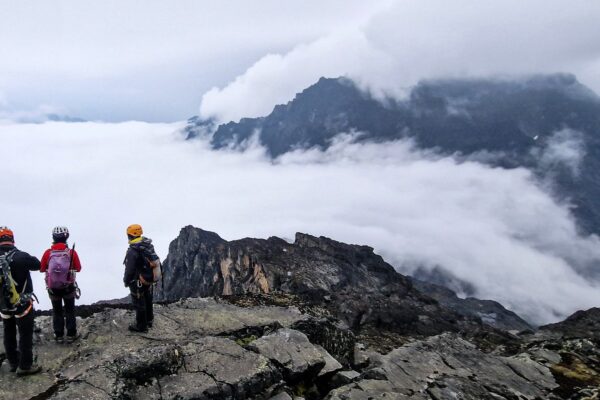
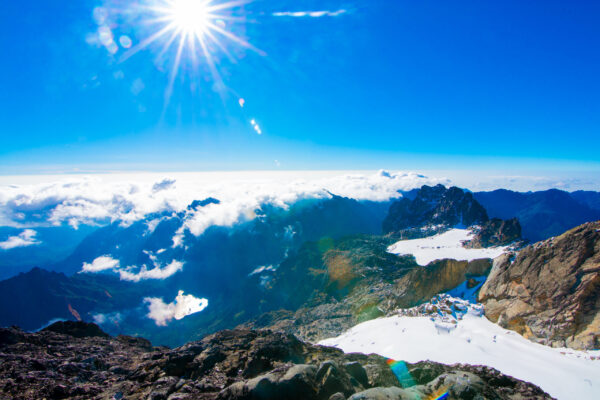
Explore our 7-Day Rwenzori Trekking Gallery, a vivid, one-stop showcase of the range’s towering ridges, glacier-polished lakes, and the smiling faces of guides and porters captured across every day of the route. The Rwenzori Trekking collection pairs stunning summit and valley photography with practical day-by-day notes, route maps, and gear tips so first-timers and seasoned trekkers alike can plan with confidence. Click through the Rwenzori Trekking images to relive golden-hour climbs, campsite stories, and the local culture that makes the Rwenzoris unforgettable.