Western Gorilla Facts: Weight, Strength, Habitat, and Population
Western Gorilla Facts: (All You Need To Know)
Western Gorilla Facts: Weight, Strength, Habitat, and Population. All you need to know about the Great Apes of Central/Western Africa (Lowland Western Gorilla)
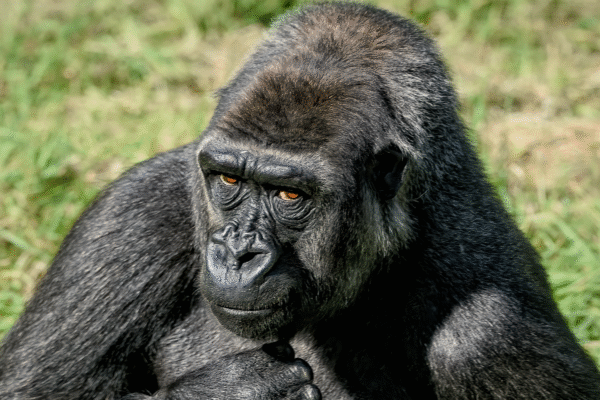
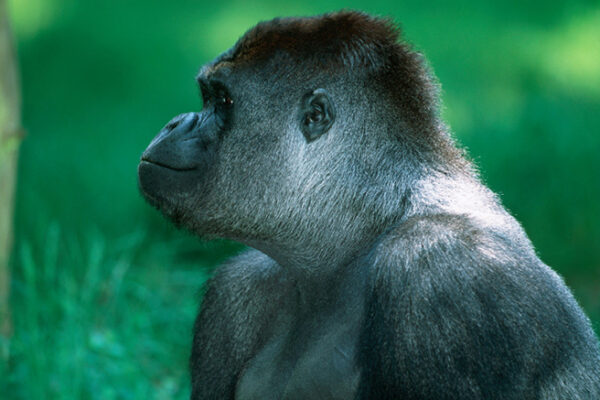
The Western gorilla (genus Gorilla gorilla) is the great-ape heavyweight of West and Central African rainforests, a highly intelligent, mostly plant-eating primate that plays a keystone role in its ecosystem. There are two main forms commonly discussed: the more widespread western lowland gorilla and the much rarer Cross River gorilla. Western gorillas live in stable family groups led by a dominant silverback male; these groups display rich social lives with grooming, play, vocal calls, and subtle gestures that coordinate group movement and care for young. They are primarily frugivores (fruit-eaters) but also eat leaves, shoots, bark, and occasional insects, and their seed-eating habits make them important forest gardeners who help disperse and regenerate trees across vast tracts of jungle.
Despite Western Gorilla intelligence and ecological importance, and the fact that Western Gorillas share roughly 98% of their DNA with humans, Western Gorillas face severe threats from habitat loss, commercial hunting, disease outbreaks (including devastating viral illnesses), and the illegal wildlife trade. Some populations are critically small and require emergency protection; conservation efforts combine protected areas, anti-poaching patrols, community partnerships, and eco-tourism that funds local stewardship. Studying western gorillas has revealed surprising cultural and tool-use behaviors, long life histories with slow reproduction, and complex emotional bonds, all of which make conserving them not only an ecological priority but a moral one. Supporting on-the-ground conservation groups or responsibly managed wildlife tourism helps protect these gentle giants and the forests they sustain.
Western Gorilla Weight
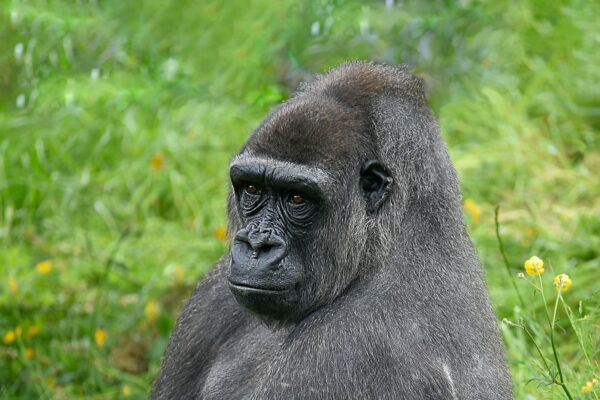
Western gorillas are powerfully built apes with substantial body mass. Adult males, called silverbacks, typically weigh between 140 and 220 kilograms, though exceptionally large individuals can exceed this range; females are markedly smaller, often weighing around 70 to 110 kilograms. Weight varies by subspecies, nutrition, and habitat quality, with captive individuals sometimes heavier due to a consistent food supply. Heavier body mass supports dominance, territory defense, and the physical demands of moving through dense forest. Gorilla body composition emphasizes muscle and robust bones rather than excess fat, reflecting their strength and adaptation to a mainly plant-based diet. They have large hands.
Western Gorilla Strength
Western gorillas possess remarkable physical strength that belies their primarily herbivorous diet. Measured strength estimates are imprecise, but a fully grown silverback can exert forces many times greater than an average human, enabling it to bend saplings, break branches, and confront predators or rival males. Their muscular shoulders, chest, and arms support knuckle-walking and climbing. Strength is deployed in displays, chest-beating, vocalizations, and charging, which often prevent physical conflict by intimidating rivals. Despite power, they are generally gentle and use force primarily for protection and social dominance. Young gorillas gradually build power through play and social interactions together.
Western Gorilla Habitat
Western gorillas inhabit lowland tropical rainforests, swamp forests, and mixed forest-savanna mosaics across west and central Africa. Their range includes countries such as Cameroon, Gabon, the Republic of Congo, the Democratic Republic of Congo, and parts of Nigeria and Equatorial Guinea. They prefer dense, fruit-rich forests with abundant undergrowth and seasonally available food, often ranging widely to follow fruiting patterns. Swampy areas and riverine corridors offer important feeding grounds, while elevated ridges can provide nesting sites. Habitat fragmentation from logging, agriculture, and roads isolates populations and reduces access to vital resources. Protected corridors, community forests, and ecotourism help connect and conserve habitat.
Western Gorilla Population
Estimating western gorilla numbers is challenging due to inaccessible terrain and political instability in parts of their range. The western lowland gorilla remains the more numerous subspecies, with population estimates in the tens of thousands, but showing regional declines. The Cross River gorilla is critically endangered, with only a few hundred individuals confined to fragmented pockets on the Nigeria–Cameroon border. Threats include habitat loss, hunting, and disease, such as Ebola, which has caused catastrophic local declines. Conservation work combines protected areas, community engagement, and research to monitor and stabilize populations. International collaboration and local conservation initiatives are critical for recovery.