Combine Gorilla Trekking with a Tanzania Safari (2027 Guide)
Gorilla Trekking with a Tanzania Safari Itinerary Guide
How to Combine Gorilla Trekking with a Tanzania Safari? The Complete 2027 Planning Guide. Here’s how routing, permits, visas, packages, and timing actually work.
Gorilla trekking with a Tanzania safari is, geographically speaking, an odd couple. Mountain gorillas live in the misty, high-altitude forests of Rwanda, Uganda, and the Democratic Republic of Congo, nowhere near the Serengeti’s open plains or Ngorongoro’s crater floor. But that hasn’t stopped this pairing from becoming one of the most requested East African itineraries we tailor at JimJam Safaris, and for good reason: it lets travellers experience two of the continent’s most different wildlife environments in a single trip, without adding as much extra travel time as people assume.
This guide walks through exactly how the combination of gorilla trekking with a Tanzania safari works in practice: routing, timing, permits, visas, costs, and how to structure the days so the trip doesn’t feel like two disconnected holidays stitched together.
Gorilla Trekking and Tanzania Safari Tailored Itineraries
Our gorilla trekking and Tanzania safari tailored itineraries combine unforgettable primate encounters with the spectacular wildlife landscapes of Tanzania, creating seamless journeys designed around your interests, travel style, and budget. From tracking mountain gorillas in Uganda or Rwanda to exploring the Serengeti, Ngorongoro Crater, and Tarangire, every gorilla trekking and Tanzania safari programme is carefully planned with flexible accommodation, private guiding, reliable transport, and meaningful cultural experiences. Whether you are seeking a luxury escape, private adventure, photography-focused trip, or family holiday, our gorilla trekking and Tanzania safari packages can be customized to create a smooth and memorable East African journey.
10-Day Rwanda Gorillas and Northern Tanzania Safari
- Day 1: Arrive in Kigali, transfer to the hotel, and rest after the international flight.
- Day 2: Drive to the Musanze/Volcanoes National Park area (roughly 2.5–3 hours), afternoon at leisure or optional Dian Fossey-related excursion.
- Day 3: Gorilla trekking day, early briefing at park headquarters, guided trek (duration varies with gorilla movement), afternoon to recover.
- Day 4: Return to Kigali, city tour (Kigali Genocide Memorial, local markets), evening flight or overnight ahead of next day’s connection.
- Day 5: Fly Kigali–Kilimanjaro, road transfer to Arusha, briefing dinner.
- Day 6: Fly or drive to Tarangire National Park; afternoon game drive among Tarangire’s baobabs and elephant herds.
- Day 7: Transfer to Ngorongoro Crater rim, afternoon at leisure with crater views.
- Day 8: Full-day crater floor game drive, one of Africa’s most concentrated wildlife areas.
- Day 9: Drive or fly to the Serengeti; afternoon game drive on arrival.
- Day 10: Morning game drive; fly out via Kilimanjaro or Arusha for international departure.
14-Day Uganda Primates and Tanzania Grand Circuit
- Days 1–2: Arrive in Entebbe, transfer toward Bwindi (this is a long drive, typically broken with a stop en route or done via a short domestic flight).
- Day 3: Gorilla trekking in Bwindi.
- Day 4: Optional second activity, a Batwa cultural walk or a second trek in a different sector, or a travel day toward Kigali.
- Day 5: Drive to Kigali (roughly 4–5 hours from southern Bwindi), overnight.
- Day 6: Fly Kigali–Kilimanjaro, transfer to Arusha.
- Day 7: Travel to Tarangire, afternoon game drive.
- Day 8: Transfer to Ngorongoro Highlands.
- Day 9: Full-day exploration of the Ngorongoro Crater.
- Days 10–12: Serengeti, central and/or northern sectors, depending on migration timing, multiple game drives.
- Day 13: Optional Zanzibar beach extension flight or extra Serengeti time.
- Day 14: Depart via Kilimanjaro.
Why Gorilla Trekking with a Tanzania Safari Combination Works
A gorilla trek and a Tanzania safari deliver almost entirely different experiences, which is exactly the appeal:
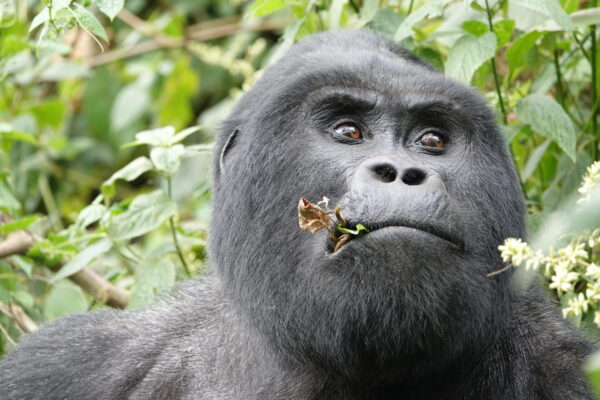
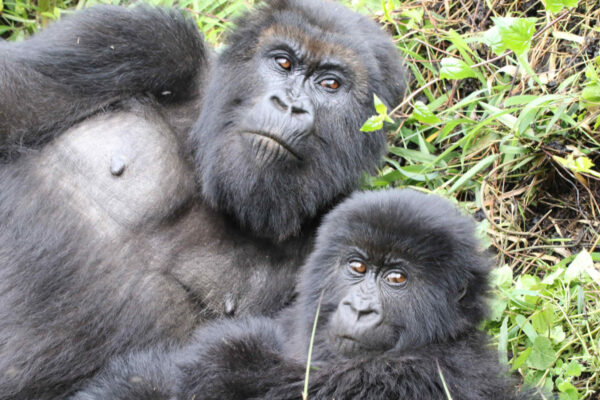
- Gorilla trekking is a forest experience, hiking through bamboo and montane rainforest, often at altitude, for a single hour with a habituated gorilla family. It’s physical, intimate, and unpredictable in duration.
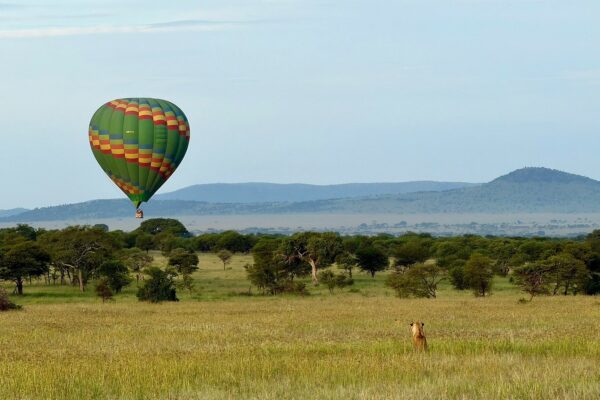
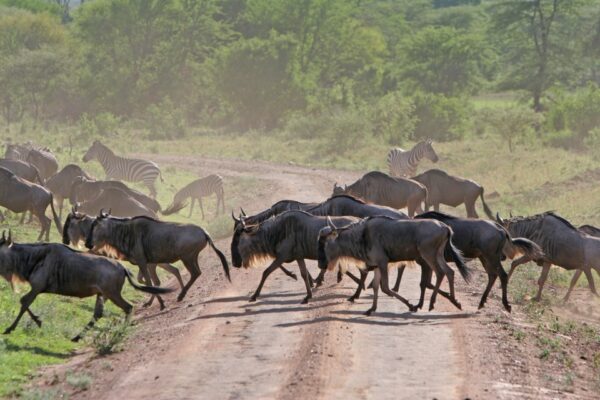
- A Tanzania safari is a vehicle-based savannah experience, the Serengeti’s endless plains, Ngorongoro’s crater ecosystem, and (depending on timing) the Great Migration. It’s about the volume and variety of wildlife rather than a single close encounter.
Travellers who do both often describe the gorilla trek as the emotional highlight of the trip and the Tanzania leg as the wildlife-volume highlight. Neither replaces the other, which is why so many first-time African safari travellers ask about pairing them rather than choosing one.
How to Get from Gorillas to the Serengeti?
This is the part that trips people up, so it’s worth being precise about it.
There is no direct overland route.
Rwanda and Uganda’s gorilla parks sit far to the west, while Tanzania’s northern safari circuit (Serengeti, Ngorongoro, and Tarangire) is accessed via Arusha or Kilimanjaro International Airport (JRO). There’s no practical road route connecting them; you fly.
Route 1: Rwanda to Tanzania (the shorter connection)
This is the most efficient pairing. RwandAir operates direct flights between Kigali (KGL) and Kilimanjaro International Airport (JRO), a flight of roughly 1 hour 45 minutes, several times a week. Air Tanzania also serves this route. From Kilimanjaro, it’s a short road transfer (around an hour) to Arusha, the usual jumping-off point for northern Tanzania safaris.
Because Rwanda’s gorilla trekking is based around Volcanoes National Park near Musanze, and Kigali is only about 2–2.5 hours away by road, the sequence typically looks like:
Kigali → Musanze (road) → gorilla trek → Kigali (road) → Kilimanjaro (flight) → Arusha/safari circuit (road)
Route 2: Uganda to Tanzania (longer, but workable)
Uganda’s gorilla trekking happens in Bwindi Impenetrable National Park or Mgahinga Gorilla National Park, both in the country’s remote southwest. Getting from there to Tanzania takes an extra step, usually one of:
- Fly from a Bwindi-area airstrip (Kihihi or Kisoro) to Entebbe, then connect to Kilimanjaro (often routed via Nairobi)
- Cross overland into Rwanda first (Bwindi to Kigali is a manageable drive), then fly Kigali–Kilimanjaro as above
For this reason, many of our Uganda–Tanzania combination itineraries route travellers out via Kigali rather than back through Entebbe — it shaves a connection and a day off the trip.
Route 3: Kenya as a stepping stone
Nairobi is a major regional hub, so some itineraries connect Uganda or Rwanda to Tanzania via Nairobi, particularly if Kenya (Maasai Mara, Amboseli) is also part of the trip. This adds a logical third country rather than extra dead time, since Nairobi–Kilimanjaro and Nairobi–Arusha connections are frequent.
Practical takeaway: if gorilla trekking plus Tanzania is your main goal and you want the cleanest routing, building the trip around Rwanda rather than Uganda will usually save you a day of travel. If chimpanzee trekking or Queen Elizabeth National Park is also on your list, Uganda’s extra logistics are worth it.
Visas: The Detail Most Travellers Get Wrong
This trips up more travellers than almost anything else in the planning process, so it’s worth stating clearly: the East Africa Tourist Visa (EATV) does not cover Tanzania.
The EATV is a single visa, currently priced at US$100, that permits multi-entry travel between Kenya, Uganda, and Rwanda for 90 days. It is genuinely useful if your trip only involves those three countries. But Tanzania sits outside this arrangement; it has never joined the EATV scheme, so any itinerary that includes Tanzania requires a separate Tanzania eVisa applied for independently through Tanzania’s official immigration portal.
In practice, this means a Rwanda-plus-Tanzania gorilla safari typically requires:
- A Rwanda visa (many nationalities receive visa-free entry or visa on arrival — check current requirements for your passport)
- A separate Tanzania eVisa, applied for in advance
And a Uganda-plus-Tanzania itinerary requires:
- A Uganda eVisa (or the EATV if Kenya/Rwanda are also on the itinerary)
- A separate Tanzania eVisa
Uganda also requires a yellow fever vaccination certificate for all travellers over one year old, and Tanzania frequently asks for the same on entry if you’ve transited through a yellow fever-endemic country, which, on this exact itinerary, you will have. Build this into your pre-trip checklist well before departure. Visa rules, fees, and processing times change; always confirm current requirements on the relevant government immigration portal before booking flights.
Gorilla Permits: What They Cost and Why It Matters for Planning
Your choice of Uganda or Rwanda for the gorilla trekking leg has a real effect on both budget and itinerary structure.
Rwanda: A gorilla permit for Volcanoes National Park costs US$1,500 per person for international visitors. This single, premium-priced permit model is part of Rwanda’s low-volume, high-value approach to gorilla tourism, and it tends to appeal to travellers who want the shortest possible logistics chain given Kigali’s easy onward connection to Tanzania.
Uganda: Uganda’s standard gorilla trekking permit is priced at US$800 per person for foreign non-residents, making it noticeably more affordable than Rwanda’s. Because permit pricing in Uganda has changed at each tariff review, and the most recent review period has just concluded, this is exactly the kind of detail that shifts and should never be assumed from an older source.
Uganda also offers a Gorilla Habituation Experience: a longer, small-group encounter (up to four hours, versus the standard one hour) with a semi-habituated family, priced at $1,500.
A few planning points that apply regardless of country:
- Permits should be booked several months in advance, especially for June–September and December–February, which are the two dry-season peak windows.
- The minimum age for gorilla trekking is 15 in both countries.
- Wildlife sightings can never be guaranteed. Permits secure your access and guided trek; gorillas are wild animals, and while sighting rates are very high given how closely the habituated families are monitored, no reputable operator will promise a sighting.
Best Time to Visit for Both Legs of the Trip (Gorilla Trekking with a Tanzania Safari)
Timing this combination well means finding overlap between gorilla trekking conditions and what you want to see in Tanzania.
Gorilla trekking is possible year-round, but trails are less muddy and more manageable during the two dry seasons: June–September and December–February. The “green season” months (March–May, and to a lesser extent November) bring lush scenery and thinner crowds, but also heavier rain and tougher underfoot conditions on the trek itself.
Tanzania’s safari calendar is largely built around the Great Migration’s movement:
- June–July: the Serengeti’s herds are pushing north toward the Mara River — dramatic crossing season begins.
- August–October: herds are generally in the northern Serengeti and across into Kenya’s Mara ecosystem.
- December–March: herds return south to the short-grass plains around Ndutu and Ngorongoro, including the calving season (roughly late January–February), when predator action is especially concentrated.
- April–May: the long rains — quieter, greener, and better value, but with real rainfall to plan around.
The sweet spot for combining both: June–September lines up beautifully, giving you dry-season gorilla trekking conditions alongside strong Serengeti game viewing and, depending on exact dates, a shot at migration river crossings. December–February also works well, pairing dry-season trekking with Ngorongoro/Ndutu calving season. The shoulder months (March–May, November) can offer excellent value and fewer crowds for travellers comfortable with more rain and softer trekking conditions.
What Gorilla Trekking with a Tanzania Safari Trip Costs
Costs for a gorilla trekking with a Tanzania safari combination vary widely based on:
- Which country do you choose for gorilla trekking (Uganda’s lower permit cost is the single biggest budget lever)
- Number of trekking days and whether you add a habituation experience
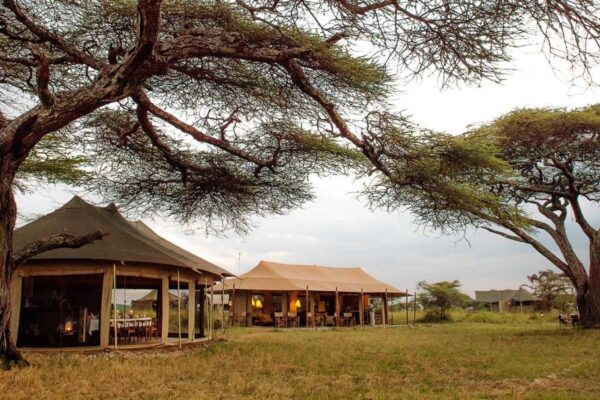
- Accommodation category throughout (mid-range lodges versus luxury tented camps)
- Group size and whether vehicles/guides are private or shared
- Season: peak dry-season months command premium lodge rates in both countries
- Domestic and connecting flights, which add up quickly on a multi-country itinerary
- Migration timing in Tanzania, since northern Serengeti river-crossing season and Ndutu calving season both carry premium pricing
As a general shape, the gorilla permit alone represents a high fixed cost regardless of anything else, and Tanzania’s northern circuit lodges and camps range enormously from comfortable mid-range properties to exclusive luxury camps. Because of this range, we don’t publish fixed package prices in general guides like this one; any numbers here would be indicative at best. What we can do is build a detailed, itemised Gorilla Trekking with a Tanzania Safari quote once we know your dates, group size, and accommodation preferences, so you’re working from real current pricing rather than a rough estimate.
Gorilla Trekking with a Tanzania Safari: Physical Fitness and Trip Pacing
It’s worth being honest about what this combination asks of travellers. Gorilla trekking involves hiking at altitude (Volcanoes and Bwindi both sit above 2,000 meters) over uneven, sometimes steep, and muddy terrain for a duration that can run from under an hour to several hours depending on where the gorilla family has moved. Porters are available and genuinely worth hiring; they’re part of the local community revenue-sharing model and make a real difference on tougher days.
The Tanzania leg, by contrast, is almost entirely vehicle-based, with short walks at lodges and occasional guided nature walks. This makes the combination well suited to travellers of a wide range of fitness levels; the physically demanding day (or two) is concentrated, and the rest of the trip is comfortable and accessible.
Why Plan a Gorilla Trekking with a Tanzania Safari with JimJam Safaris
Stitching gorilla trekking with a Tanzania safari together well means managing two countries’ permit systems, two visa processes, cross-border flight timing, and realistic daily pacing, all while making sure you’re not spending a disproportionate amount of the trip in transit. We build these itineraries privately and tailor-made, matching your dates to permit availability, migration timing, and the accommodation style you actually want, whether that’s comfortable mid-range lodges or higher-end camps.
That’s the core of what “affordable luxury” means to us: itineraries built on genuine local knowledge and carefully chosen accommodation and guiding, priced with real value in mind rather than unnecessary extravagance, not a stripped-down budget version of the experience.
Frequently Asked Questions about Gorilla Trekking with a Tanzania Safari
Can I do gorilla trekking with a Tanzania safari in one trip without wasting days on travel?
Yes, particularly if you route through Rwanda — the Kigali–Kilimanjaro flight is under two hours, so the connection itself isn’t the time-consuming part. The main planning task is sequencing the gorilla trek, road transfers, and flight days so you’re not doubling back.
Do I need two separate visas?
In most cases, yes. Tanzania is not part of the East Africa Tourist Visa, so it always requires its own eVisa regardless of which other East African countries you’re visiting.
Is Rwanda or Uganda better for combining with Tanzania?
Rwanda offers a shorter, simpler connection via the direct Kigali–Kilimanjaro flight, while Uganda’s permits are typically less expensive, and the country offers a wider range of primate experiences (chimpanzee and golden monkey trekking alongside gorillas). Which is “better” depends on your budget and whether you want to prioritise logistics or a broader primate itinerary.
How many days should I set aside for the whole trip?
Ten days is workable for a focused gorilla-plus-northern-Tanzania trip, though 12–14 days allows for a less rushed pace and room for a Zanzibar extension.
Will I definitely see gorillas?
99% guaranteed chance of seeing the gorillas
Ready to plan your own gorilla trekking with a Tanzania safari combination? JimJam Safaris can build a private, tailor-made itinerary around your travel dates, fitness level, budget, and the specific parks and experiences that matter most to you. Talk to us.