
Best Northern Tanzania Safari Circuit Guide for First-Timers
The #1 Northern Tanzania Safari Circuit Guide for 2027
Planning your first Northern Tanzania Safari Circuit? Our guide covers the Northern Circuit parks, the best time to go, costs, itineraries, and what to expect. If you are choosing where to go on your first African safari, the Northern Tanzania safari circuit is one of the safest bets you can make. In a single Northern Tanzania safari trip, you can watch elephants among baobab trees, descend into a volcanic crater packed with wildlife, and spend days on the open plains of the Serengeti. The route is well established, the lodges and camps range from simple to very comfortable, and the distances are manageable if the itinerary is built sensibly.
This Northern Tanzania Safari guide explains what the Northern Circuit is, what each park offers, when to go, how many days you need, what it costs, and how to avoid the mistakes first-time safari travelers most often make.
What Is the Northern Tanzania Safari Circuit?
The Northern Circuit is the cluster of protected areas in northern Tanzania, reached from the city of Arusha. It is the most visited safari region in the country. The core stops are:
- Tarangire National Park: elephants, baobabs, and a seasonal river
- Lake Manyara National Park: a narrow park of groundwater forest, floodplain, and Rift Valley escarpment
- Ngorongoro Conservation Area: including the Ngorongoro Crater, plus Ndutu in the south
- Serengeti National Park: Tanzania’s most famous park and the stage for the Great Migration
Arusha National Park, close to town, is an optional short add-on, and Mount Kilimanjaro is visible from the Arusha area on clear days. Many travelers also finish with a beach stay in Zanzibar.
The word “circuit” is useful. Most itineraries run as a loop: Arusha, Tarangire, Manyara, Ngorongoro, Serengeti, then back to Arusha by road or on a light aircraft flight.
Why the Northern Tanzania Safari Circuit Suits First-Time Safari Travelers
- Variety in one trip. Savanna, woodland, forest, soda lake, and crater each produce different wildlife, so the trip rarely feels repetitive.
- Strong game viewing. The Serengeti and Ngorongoro Crater are among the most reliable places in Africa to see lions, elephants, buffalo, giraffe, zebras, and wildebeest. Leopards and black rhinos are possible but are never guaranteed.
- Well-developed infrastructure. Arusha has a large safari industry, Kilimanjaro International Airport is close, and there is a wide range of accommodation.
- Flexible length. You can do a short trip of four or five days or build a two-week journey with a beach extension.
- Good fit for most travelers. Families, couples, honeymooners, photographers, and solo travelers all use the circuit, and game drives in a private vehicle are not physically demanding.
One honest caveat: wildlife is wild. Even in the Serengeti, no operator can promise a particular sighting. A good itinerary improves your odds, but it cannot remove the element of chance.
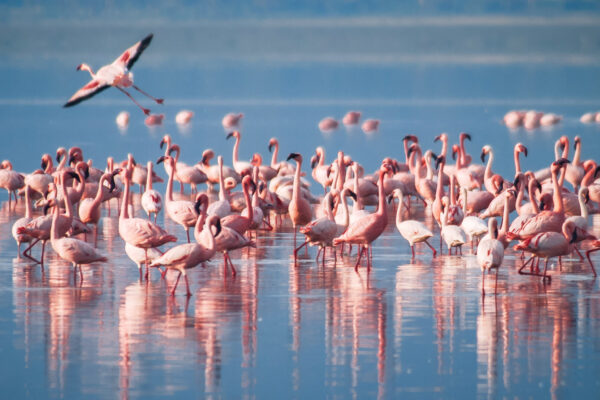
Parks in the Northern Tanzania Safari Circuit
Tarangire National Park
Tarangire is often the best opening act. It sits roughly a two- to three-hour drive from Arusha so that you can reach it on the first full day without a punishing transfer.
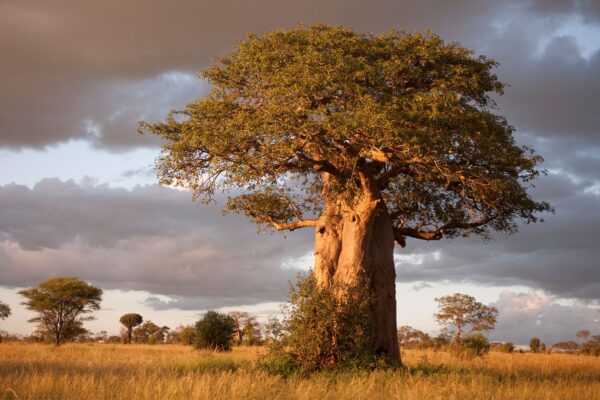
The park is known for large elephant herds, ancient baobab trees, and the Tarangire River, which pulls wildlife in during the dry months. Lions, leopards, giraffes, zebra, buffaloes, and a good range of birds are also found here. Tree-climbing pythons and several antelope species that are harder to find elsewhere, such as fringe-eared oryx and gerenuk, are occasional bonuses.
Best for: elephants, dry-season game viewing, a gentle start to the trip.
Lake Manyara National Park
Lake Manyara is smaller and quieter. The park runs along a steep Rift Valley escarpment, and the habitat changes quickly from groundwater forest to open grassland to the alkaline lake shore.
You can expect baboons, blue monkeys, elephants, buffalo, giraffe and hippos, with plenty of birdlife. The park is famous for tree-climbing lions, but these are an occasional sighting, not something to plan around. Flamingos and other waterbirds depend on lake levels and season.
Most first-timers give Manyara a half day, often as a morning game drive on the way to Karatu or Ngorongoro.
Best for: birdlife, forest scenery, a varied half-day break between longer drives.
Ngorongoro Crater and the Conservation Area
The Ngorongoro Crater is a collapsed volcano whose floor is roughly 260 square kilometers, enclosed by walls rising several hundred meters. Because the animals live inside a natural bowl, wildlife density is high and sightings are often close.
Resident species include the lion, spotted hyena, elephant (mostly bulls), buffalo, zebra, wildebeest, hippo, and one of the more accessible places in Tanzania to look for black rhino. Leopards exist but are hard to find. Flamingos can appear on Lake Magadi when water conditions suit them.
Practical points for first-timers:
- Game drives into the crater begin early, and the time you can spend on the crater floor is limited by the authority. Confirm the current rules before you plan the day.
- Mornings can be cool and misty on the rim at around 2,200 metres, so pack layers.
- The crater is busy. An early start, a driver who knows the quieter tracks, and patience all help.
- Vehicles entering the crater pay a separate crater service fee.
The wider Ngorongoro Conservation Area is also home to Maasai communities who live alongside wildlife, and it includes the southern plains known as Ndutu, important during the calving season.
Best for: concentrated wildlife, rhino possibilities, dramatic scenery.
Serengeti National Park
The Serengeti is the centrepiece of the circuit and the reason most travelers come to Tanzania. Its name comes from a Maasai word often translated as “endless plains,” and the first view of the open grassland explains why.
The park is large, so where you stay matters. A broad overview:
- Central Serengeti (Seronera area): reliable year-round game viewing, with resident lion and leopards, and a good base for first-timers.
- Southern Serengeti and Ndutu: the wildebeest calving grounds, usually busiest from around January to March.
- Western Corridor: relevant when the herds cross the Grumeti River, often in mid-year.
- Northern Serengeti (Kogatende and the Mara River): where river crossings are most often seen in the second half of the year.
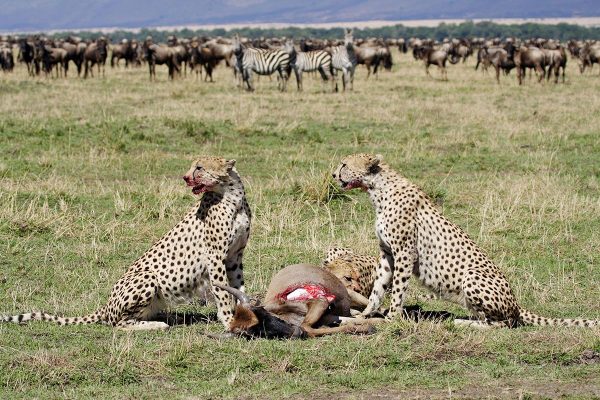
Big cats, giraffe, elephants, hippo, crocodiles, and huge numbers of grazers are present across the park. The Big Five (lion, leopard, elephant, African buffalo, and rhino) can all occur in the Serengeti, but rhino are very rare and are not a realistic expectation.
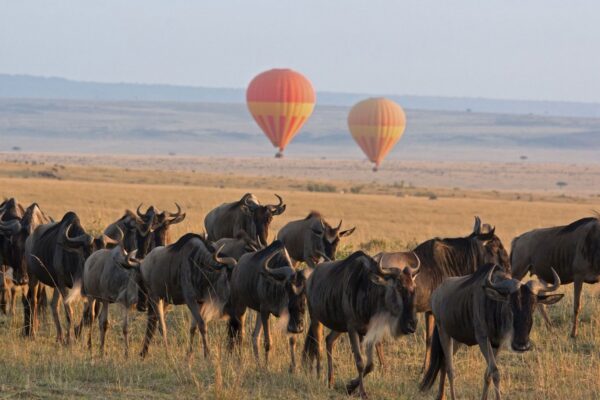
Best for: big cats, open-plain safaris, the Great Migration, hot-air balloon flights over the plains.
The Great Migration: What First-Timers Should Know
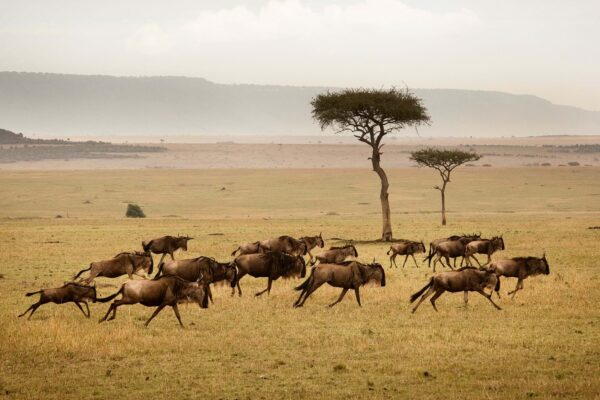
The Great Migration is not a single event on a fixed date. It is a year-round, circular movement of hundreds of thousands of wildebeest, with zebra and gazelle, following the rains and fresh grass between the Serengeti and the Masai Mara in Kenya. Timing varies from year to year with rainfall.
| Period | Typical Herd Location | What You May See |
|---|---|---|
| January to March | Southern Serengeti and Ndutu | Calving season, with predators following the young. |
| April to May | Central and Western Serengeti | Herds moving north in the green season, with fewer vehicles. |
| June to July | Western Corridor and central areas | Herds gathering, with possible Grumeti River crossings. |
| July to October | Northern Serengeti and the Mara River | Mara River crossings are most likely, but unpredictable. |
| November to December | Moving back south | Herds heading towards the short-rains grasslands. |
How Many Days Do You Need for a Northern Tanzania Safari?
- 4 to 5 days: a quick introduction, usually Tarangire or Manyara, Ngorongoro, and a short Serengeti stay, often with a flight.
- 6 to 7 days: the most popular first-time length. It covers the main parks without excessive driving.
- 8 to 10 days: the sweet spot if the migration matters to you, because it allows three or more nights in the Serengeti, or two different Serengeti areas.
- 10 days or more: room to add a beach stay, a cultural visit, Kilimanjaro-region time, or Ruaha and Nyerere in the south.
A common first-timer mistake is trying to see everything in four days. The distances are real, and a rushed itinerary leaves little time actually watching animals.
What Does a Northern Tanzania Safari Cost?
Honest answer: it depends, and anyone quoting a single number without knowing your dates and style is guessing. Costs vary with:
- Travel season and exact dates
- Number of travelers and whether the safari is private or shared
- Accommodation category (camping, comfortable tented camps, lodges, luxury camps)
- Length of the safari
- Domestic flights versus overland transfers
- Vehicle type
- Optional extras such as a balloon flight, cultural visits or a beach extension
- International flights, visas and travel insurance (usually separate)
| Season | Months (approx.) | Pros | Cons |
|---|---|---|---|
| Dry season | June to October | Easiest game viewing, comfortable weather, strong Tarangire and northern Serengeti | Busiest and most expensive |
| Calving season | January to March | Newborn wildebeest and predators on the southern plains | Some rain, variable roads |
| Long rains | April to May | Lower rates, green landscapes, fewer visitors | Heavy rain, some camps close, harder driving |
| Short rains | November to December | Fresh scenery, good birdlife | Occasional showers |
7-Day Northern Tanzania Safari Circuit Itinerary
This is a realistic outline for a first trip. Exact timing depends on your flights, season, and accommodation.
Day 1: Arrival in Arusha. Your guide meets you at Kilimanjaro International Airport and transfers you to a comfortable hotel or lodge near Arusha. Use the evening to rest and go over the plan. Dinner and a good night’s sleep are the priority after a long flight.
Day 2: Arusha to Tarangire National Park. Drive for roughly two to three hours, then spend the day on game drives, with a picnic lunch in the park. Look for elephant herds, baobabs, and riverside wildlife. Overnight in or near the park, in a lodge or tented camp.
Day 3: Tarangire to Lake Manyara and Karatu. Take a morning game drive in Tarangire, then transfer toward Lake Manyara for an afternoon in the park, depending on the time. Continue to the Karatu highlands for the night, which positions you for an early Ngorongoro start. Expect a fuller driving day.
Day 4: Ngorongoro Crater to the Serengeti. Start early and descend into the crater for a morning game drive. After lunch, drive to the Serengeti, which typically takes around five to six hours with a stop or two. Arrive at your lodge or camp in the evening. This is the longest day of the trip, but it brings you into the Serengeti with the crater behind you.
Day 5: Full day in the Serengeti. Game drives at the best hours, early morning and late afternoon, with a break at camp in the heat of the day if you choose. Your guide will follow recent sightings and the herd movements. Optional: a sunrise hot-air balloon flight, booked in advance and at extra cost.
Day 6: Serengeti to Arusha. Enjoy a final morning game drive, then take a domestic flight from a Serengeti airstrip back to Arusha, or drive if you prefer a longer overland day. Spend the night near Arusha, so you have a buffer before your international flight.
Day 7: Departure. Transfer to Kilimanjaro International Airport for your flight home or onward to Zanzibar.
What “affordable luxury” means
At JimJam Safaris, affordable luxury does not mean cheap. It means spending where it improves your trip: a comfortable bed, good food, a skilled private guide, a well-maintained safari vehicle with a window seat for every guest, and a sensible itinerary that avoids wasted hours on the road. We aim to keep costs sensible by planning carefully, choosing the right camp or lodge for the location, and being straightforward about what each option includes.
If you would like exact pricing, we will provide a written quote based on your dates, group size, and preferred level of comfort.
Lodge, Tented Camp, or Luxury Camp?
- Lodges offer solid walls, hot showers, and a more traditional hotel feel. They suit travelers who want comfort and reliability.
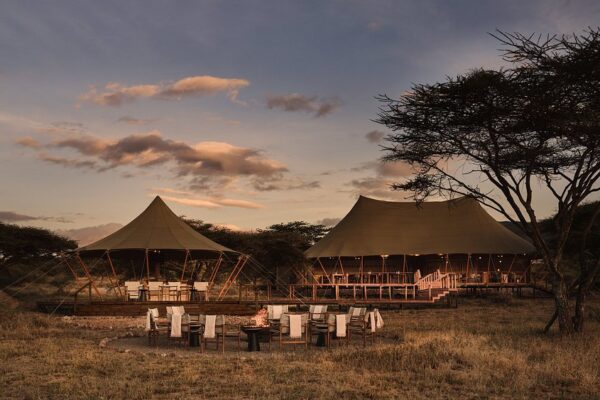
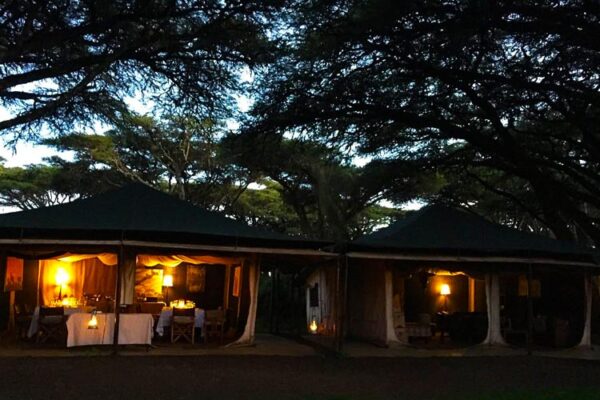
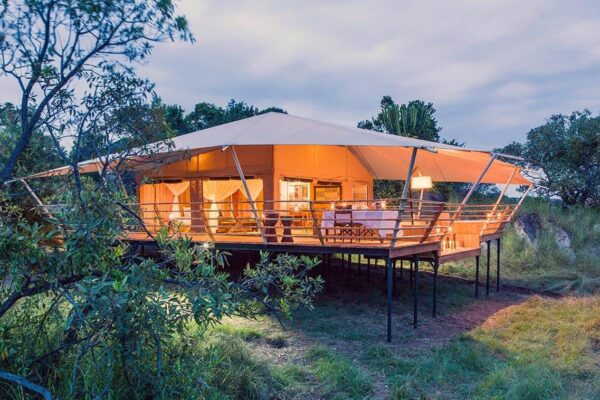
- Permanent tented camps give you a canvas-walled room with a proper bed and private bathroom, often with the sounds of the bush at night.
- Mobile and seasonal camps move with the migration and put you close to the herds, with a more adventurous feel.
- Luxury tented camps and lodges add larger rooms, higher service levels, and prime locations.
For a first safari, a mix often works well: a comfortable lodge near Ngorongoro and a well-located tented camp in the Serengeti. We select accommodation by location and comfort, not by name recognition alone.
Park fees: the fixed cost behind every itinerary
Park and conservation fees are set by the authorities and charged per person, per 24 hours. The figures below are approximate adult non-resident rates for the 2027/28 period gathered from current operator guides, and sources differ slightly. Please verify them with TANAPA and the Ngorongoro Conservation Area Authority before relying on them.
| Item | Approximate adult fee |
|---|---|
| Serengeti National Park | About US$82 to US$84 per person per 24 hours |
| Ngorongoro Conservation Area | About US$70 to US$82 per person per 24 hours |
| Tarangire National Park | About US$59 per person per 24 hours |
| Lake Manyara National Park | About US$53 to US$59 per person per 24 hours |
| Concession or camping fees | Added per person per night when sleeping inside a park; amounts vary by area and season |
| Ngorongoro Crater service fee | Charged per vehicle; recent guides quote around US$295 |
| Children aged 5 to 15 | Lower rates; commonly around a quarter of the adult Serengeti rate |
Practical Planning for First-Timers
Getting there
Most international travelers fly into Kilimanjaro International Airport (JRO), around an hour or so from Arusha, or into Dar es Salaam, Nairobi or Arusha through connecting flights. Check airline schedules directly, as routes change.
Visas and entry requirements
Most visitors need a visa. Recent 2027 guides report a standard single-entry tourist visa fee of about US$50, with a US$100 multiple-entry option reported for U.S. citizens, available as an eVisa or on arrival. You will generally need a passport valid for at least six months, a blank page, and proof of onward travel.
Yellow fever: a vaccination certificate is generally required if you arrive from, or have recently been in, a country with yellow fever risk. Kenya, Ethiopia and Rwanda have been listed among those countries, so this matters if you combine Tanzania with another East African stop. Always confirm current rules with the Tanzania Immigration Department’s official portal and your own health authority before you travel.
Health and safety
See a travel clinic well before departure. Ask about malaria prevention, routine vaccines, and anything specific to your health. Use insect repellent, drink bottled or filtered water, and follow your guide’s instructions on foot and vehicle safety. Take out comprehensive travel insurance that includes medical evacuation.
What to pack for your Northern Tanzania safari
- Neutral-colored, breathable clothing in layers (mornings can be cold, especially at Ngorongoro)
- A warm jacket or fleece, a hat and sunglasses
- Comfortable closed shoes
- Sunscreen and insect repellent
- Binoculars (one pair per person is worth it)
- A camera with a zoom lens, spare batteries and memory cards
- Any personal medication, in your carry-on
- A small day bag and a light scarf or buff for dusty roads
Soft-sided luggage is best, especially if you will take light aircraft, which have strict baggage limits. Your operator can confirm the current allowance.
Tipping and money
Tipping guides, camp staff, and drivers is customary. Ask us for current guidance, and carry small US dollar bills in good condition. Many camps accept cards, but connectivity can be unreliable, so carry some cash as a backup.
Common First-Timer Mistakes to Avoid
- Trying to see too much in too few days. Long drives eat game-viewing time.
- Spending only one night in the Serengeti. Two is a minimum; three is better.
- Choosing a location without checking the season. Where the herds are depends on the month.
- Comparing prices without comparing inclusions. Check park fees, vehicle type, guide quality, and group size.
- Expecting guaranteed sightings. Go with an open mind and let your guide read the situation.
- Skipping a buffer night before your flight home. Long drives and flight changes can go wrong.
- Overpacking. Light aircraft and camp storage reward a smaller bag.
Responsible Safari Travel
The parks you visit depend on visitor fees, local employment, and careful management. You can help by:
- Following park rules and your guide’s instructions
- Keeping a respectful distance from animals and never feeding them
- Staying inside the vehicle where instructed and keeping noise down
- Asking permission before photographing people, and visiting communities through arrangements that benefit them directly
- Choosing accommodation and tours that employ and train local staff
- Avoiding single-use plastic where you can
If you would like to know how a specific camp or visit supports conservation or communities, ask us, and we will tell you what we can verify.
Why Plan Your Northern Tanzania Safari with JimJam Safaris
We plan private and tailor-made safaris across East Africa and Southern Africa, and we build Tanzania itineraries around the way you want to travel:
- Private itineraries paced for first-time visitors
- Comfortable, carefully selected lodges and tented camps
- Professional, experienced safari guides
- Straightforward written quotes that show what is and is not included
- Flexibility to add Zanzibar, Kilimanjaro, or a Kenya or Rwanda extension
- Help with logistics, including flights, transfers, and border arrangements where relevant
Frequently Asked Questions about the Northern Tanzania Safari
Is the Northern Circuit a good choice for a first safari?
Yes. It offers a wide range of habitats and wildlife, a well-developed tourism network, and a choice of comfort levels. It works for most ages and fitness levels.
How many days should I spend on a Northern Tanzania safari?
Seven to eight days is a strong first-trip length. Five days is workable, and ten days lets you slow down or add a beach stay.
When is the best time to go?
June to October is the classic dry season. January to March suits the calving season on the southern plains. April and May bring heavy rain but lower prices and fewer vehicles.
Can I see the Great Migration on a first safari?
Often, yes, because herds are present in some part of the ecosystem all year. Exactly where they are changes with the season, and river crossings cannot be guaranteed.
Do I need to fly between parks?
Not necessarily. Road transfers are common and scenic. Domestic flights shorten long distances, especially to and from the Serengeti, and add cost.
What is the difference between the Serengeti and Ngorongoro Crater?
The Serengeti is a vast open ecosystem known for migration and big cats. The crater is a compact, enclosed bowl with dense wildlife and a good chance of seeing rhino. Most first-timers visit both.
Is Tanzania safe for tourists?
Safari areas are generally well managed for visitors, and guides handle most logistics. Check your government’s current travel advice, use reputable operators, and follow standard precautions in cities.
Do I need a visa and yellow fever certificate?
Most travelers need a visa. A yellow fever certificate is generally required if you are coming from a country with yellow fever risk. Confirm current rules with official sources before you book.
Can I combine the Northern Circuit with Zanzibar or Kenya?
Yes. Zanzibar is a popular finish, and a Serengeti and Masai Mara combination suits travelers who want to follow the migration across the border.
Is it safe to bring children?
Many families visit. Some lodges and camps have minimum ages, and some activities have age limits, so we plan family itineraries with that in mind.